Connect with us

Blog

20th Century Patents that Changed the World

Published

on

Patents

By Alec Schibanoff

The light bulb, telephone, camera, automobile, and motion picture patents were all granted pre-1900, so they were all critical patents of the 19th Century and will not be addressed in this article. But there are several patents that were critical to the 20th Century.

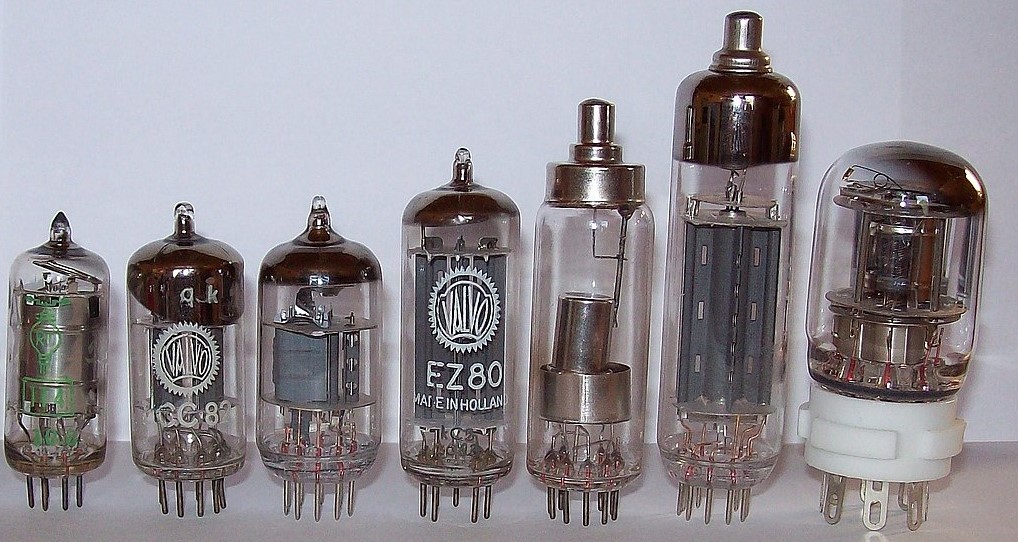
♦ Vacuum Tube: It was this invention that made the radio possible in the early years of the last century. And from the vacuum tube also came television, radar and sonar, and the first generation of computers. One John Ambrose Fleming, a child progeny and British ex-pat working in the U.S. for the Marconi Wireless Telegraph Company, was granted U.S. Patent No. 804,109 in 1905 for an “Apparatus for measuring the length of electric waves.”

Unfortunately, Fleming’s patent was invalidated on the basis that the technology had been around for years, so the invention was not truly “novel.” Talk about an unexpected outcome. Fleming sued the De Forest Radio Company for infringement of his patent. The lawsuit dragged on for decades until the U.S. Supreme Court finally invalidated Fleming’s patent in 1943 – 20 years after the patent expired!

The vacuum tube – for those who do not know – is a device that controls the flow of electrons in a vacuum. It is used as a switch, amplifier, or display screen (making television, radar and sonar, and computers possible). When used as on/off switch, a vacuum tube allowed the first computers to perform digital computations.

Getting the first use for vacuum tubes, radio, off the ground was a chicken-and-egg proposition. No one would buy a radio unless there was a radio station to listen to, and no one was going to start a radio station until there were lots of people with radios. Westinghouse Electric was one of the first manufacturers of consumer radios, and to make the whole concept work, Westinghouse got into the radio station business. It launched KDKA in Pittsburgh (Westinghouse’s headquarters city) in 1920 and eventually owned and ran 24 stations throughout the U.S. under the “Group W” moniker. Westinghouse Broadcasting was sold to CBS in 1999, but all those stations – including KDKA – are still in business. KDKA is now an all-news format 50,000-watt clear channel AM station at 1080 on the dial. Tune in on your next trip to Western Pennsylvania.

Vacuum tubes grew in popularity, size, and configurations, but they had two major drawbacks. They generated a lot of heat, so a device using them had to get rid of that heat. In fact, that’s why the first radios were so large – to disperse the heat generated by the vacuum tubes. The second shortcoming was that vacuum tubes – like light bulbs – burned out. And it took just one vacuum tube to burn out to bring down the entire radio, television, or computer. Not good.

♦ Transistor: Bell Labs came to the rescue with the invention of the transistor. It essentially replaced the vacuum tube by performing the same functions, but doing so in a solid encasement instead of in a vacuum. In fact, the term “solid-state” comes from exactly that concept. The first generation of portable radios were called “transistor radios” since it was that invention that made them possible. And, of course, silicon was eventually used as the base material for the transistor, and from that we got Silicon Valley.

The transistor was the invention of three Bell Labs physicists – John Bardeen, Walter Brittain, and William Shockley – but only Shockley showed up as an inventor on the patent. All three inventors were properly recognized when they jointly received the Nobel Prize for Physics in 1956.

For those of you who are not familiar with the organization, Bell Labs was the Research & Development unit of AT&T until it was spun off to Nokia in 2016. Bell Labs is known for most of the inventions that made modern telecommunications and consumer electronics possible, but none surpassed the transistor in its impact on technology, industry, and people.

♦ Airplane: After radio, television, computers, and telecommunications – that all had their start from our No. 1 and No. 2 patents – had to come the patent that made air travel possible. We all know the story, the Wright Brothers owned a bicycle shop in Dayton, Ohio, but they wanted to fly. And at Kitty Hawk, South Carolina, they completed the first manned flight in 1903.

Wilbur and Orville actually filed their U.S. Patent Application in March 1903 – nine months before they discovered that their invention would actually work. It is likely they made a few test flights before the official test flight they made for the press in December 1903.

Here is our question: How could it have possibly taken the Patent Office over three years to grant this patent? Filed in March 1903, U.S. Patent No. 821,393 for a “Flying Machine” was not granted until May 1906, three years and two months later! It could not have been the prior art they patent examiner had to review. We really wonder what took so long? Incidentally, the Wright Brothers’ patent had just 18 Forward Citations including the Boeing Company and Sikorsky Aircraft.

♦ Nylon: Few inventions have touched so many facets of our lives as nylon. Invented at du Pont by a team led by Harvard instructor Wallace Hume Carothers, nylon is a synthetic silk-like thermoplastic made from a blend of petroleum polymers. It can be manufactured as a fiber, film, or in solid shapes.

Carothers applied for a patent for his new synthetic fiber in April 1937. Just 17 months later, U.S. Patent No. 2,130,948 for a “Synthetic fiber” was granted to E. I. du Pont de Nemours & Company. With NO patent citations, and 419 Forward Citations, this is a foundational patent. While du Pont patented nylon, it never trademarked it.

The practical effect of nylon was wide-spread and significant. Nylon was used to replace silk in the manufacture of women’s stockings. By World War II, stockings were simply called “nylons” – and many a G.I. made it through the stress of the war with a gift of nylons for his favorite dame. Parachutes were made from nylon because it was significantly cheaper and more plentiful than silk. Without nylon for parachutes, how World War II was fought would have been significantly different! Nylon was also used to add strength to tires, making nylon a critical element in cars, trucks, busses, and aircraft.

From nylon came rayon and Orlon® that replaced both wool and cotton in clothing. Teflon™ is a derivative of nylon, the basis of non-stick pots and pans as well as many friction-free parts for everything from washing machines to surgical equipment.

Kevlar® – the key material in bullet-proof vests – is a downstream product from nylon, as is Tyvek® – the material used as a moisture barrier in construction. Every time you drive past a building under construction and see the Tyvek sheets stapled to the sheathing, think of all those gals at the USA dance in their nylons.

♦ Search Engine: We could not have the dot.com world and e-commerce without search engines. There was a time – three decades ago – that every local telephone company published a telephone directory that included Yellow Pages, and that is where people went when they needed tires for their cars, shoes for their children, or Chinese take-out. Search engines replaced the Yellow Pages, and without search engines, there would be no way to find what you need on the world-wide-web. Go to Google, search for “patent broker” and see what pops up at the top of the page.

While Yahoo and some other search engines existed before Google, it was Larry Page – while a Ph.D. student at Stanford – who filed a patent application in January 1998 for what was to become search engine technology. Leland Stanford Junior University and Google LLC were granted U.S. Patent No. 6,285,999 for a “Method for node ranking in a linked database” in September 2001. And talk about a foundational patent! U.S. Patent No. 6,285,999 has 893 Forward Citations from companies as diverse as IBM, Xerox, Yahoo!, and Nokia.

E-commerce would simply not be possible without the order that search engines bring to the chaos of the web. From search engines came an entirely new concept in marketing. In real estate, they say there are three key factors to success: Location, location, and location. In the online world of today, that is truer than ever. But in a post-dot.com world, success is not where your business is physically located, but where it ranks with the major search engines.

Alec Schibanoff is Vice President of IPOfferings LLC, a leading patent broker. In addition to patent brokerage, IPOfferings publishes the IP MarketPlace newsletter, and offers patent valuation and IP consulting services and has an extensive list of patents for sale at its website.

Orlon is a registered trademark of E. I. du Pont de Nemours & Company.
Teflon is a registered trademark of Chemours Company FC, LLC.
Kevlar is a registered trademark of DuPont Safety and Construction, Inc.
Tyvek is a registered trademark of E. I. du Pont de Nemours & Company.

Continue Reading

Categories

Trending

You cannot copy content of this page