
Technology
Where Are AI Data Centers Located?

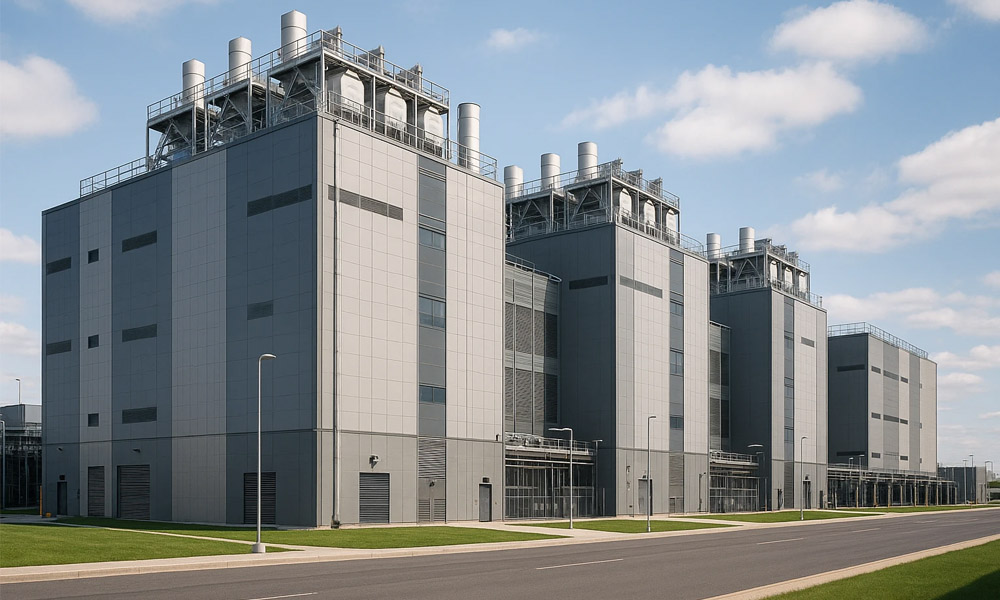
If traditional data centers were built around data storage and predictable computational workloads, AI data centers are designed to handle massive datasets, parallel processing and high-density GPU clusters. Modern AI facilities often integrate ai servers to manage these demanding tasks efficiently and at scale.
This changes the approach to site selection. AI-oriented facilities require inexpensive and stable electricity, advanced cooling systems, proximity to backbone networks and predictable regulation. As a result, these data centers are concentrated in a limited number of regions.
According to McKinsey & Company, by 2030 global data center spending will grow to about €6.7 trillion, with approximately €5.2 trillion allocated to infrastructure for AI workloads. Research by Bain & Company shows that global IT power consumption in data centers will grow by 13% to 20% annually through 2030, while Goldman Sachs expects global electricity demand from data centers to increase by 165% by 2030 compared to 2023.
Today, AI-focused infrastructure is developing rapidly, and its geographic distribution reflects a combination of strategic, economic and technological factors. Below we examine why these facilities are built where they are, which regions dominate and which locations are becoming new growth centers.
Why AI data centers are concentrated in specific regions
AI workloads consume significantly more energy than traditional computing tasks. In the United States, Deloitte forecasts that by 2035 the power consumed by AI data centers may increase more than 30-fold — reaching 123 GW compared to about 4 GW in 2024. This reflects not only the growing capacity of individual machines but also rising demands on power grids, cooling and network connectivity.
Two factors are critical for operators — electricity price and its stability. This is why regions with accessible renewable energy become key locations. Hydropower, wind and solar generation provide a competitive advantage.
Climate also plays an important role. High-density GPU data centers generate far more heat than standard servers. In colder regions, cooling costs are lower, while in hot climates operators must rely on complex liquid or hybrid cooling systems, increasing total ownership cost.
The network is equally important. AI models require constant data exchange with clouds, storage systems and external sources. For this reason, the most powerful facilities are located near major network hubs, internet exchange points and subsea cable intersections.
Regulation completes the picture. In countries with predictable rules, supportive digital policies and streamlined permitting, construction progresses more easily. Where restrictions on energy use or sustainability requirements are introduced, AI-class projects grow more slowly.
North America
North America is the leading region for AI infrastructure. In 2024, the United States accounted for about 44% of global data center capacity (~53.7 GW out of 122.2 GW), according to Visual Capitalist.
In one U.S. state — Loudoun County, Virginia — roughly 80% of the state’s data centers are concentrated, with about 5,926 MW of active capacity, 1,834 MW under construction, and 15,432 MW planned.
By 2030, data center capacity in the United States dedicated to AI workloads may exceed 123 GW, compared to ~4 GW in 2024. These figures highlight that North America is not only the leader in current capacity but is also becoming a key growth region.
China
China is one of the central regions in the global data center landscape and the expansion of AI workloads. Estimates show that China and the United States together control roughly 70% of the world’s installed data center capacity.
According to forecasts, China’s data center energy consumption could reach 479 TWh by 2030, with an average annual growth rate of around 17%. The Chinese data center market itself is valued at about USD 29.23 billion in 2025, with a projected increase to approximately USD 56.71 billion by 2030 (a CAGR of ~14%).
It is also expected that between 2025 and 2030, China will add more than 18.2 GW of new data center capacity. At the same time, there is a specific challenge: some Chinese data centers operate at low utilization levels — with certain facilities running at just 20–30%. Chinese operators are actively investing in AI-centric infrastructure — for example, capital expenditures by China’s cloud providers are expected to grow by ~65% in 2025.
These figures show that China is not only a large market but also a region with enormous growth potential, a significant project pipeline and a complex dynamic ranging from ambitious expansion plans to challenges in utilization and efficiency.
Europe
In 2024, the European Union’s installed data center capacity reached about 11.9 GW. According to McKinsey, demand for AI-ready infrastructure will grow by ~33% annually through 2030.
In addition, the global data center market is expected to significantly increase capital expenditures and the share of capacity dedicated to AI. This means that although Europe currently lags behind the U.S. and China in total volume, growth rates and favorable conditions create strong potential for expansion.
For example, Northern Europe’s cold climate, access to renewable energy and advanced telecom networks make the region attractive for high-density AI data centers.
Middle East
The Middle East has fewer publicly available global statistics on AI-specific data center capacity. However, it is well known that the Gulf countries and the UAE are implementing digital economy strategies aimed at becoming global AI hubs.
For instance, one major project in the region received an investment of about €1 billion (≈ $1.1 billion) from Google LLC in Finland — an example of how companies select locations beyond traditional markets.
Japan and South Korea
Japan is experiencing a rapid increase in data center electricity demand. By 2034, annual consumption is expected to triple — from around 19 TWh in 2024 to 57–66 TWh, equivalent to the power usage of roughly 15–18 million households. Peak data center load in Japan is forecast to reach 6.6–7.7 GW by 2034, representing about 4% of the country’s total peak demand. Japan also plans to add more than 0.5 GW of new capacity, with approximately 1.3 GW concentrated in the Tokyo metropolitan area and about 0.44 GW in Osaka.
South Korea remains one of the most active data center markets in the Asia–Pacific region. By 2023, the country had reached around 591 MW of installed capacity. The national data center market is valued at about USD 1.65 billion in 2025 and is projected to expand to USD 4.27 billion by 2030 (CAGR ~20.95%). South Korea’s overall IT load is also rising quickly — from approximately 1.96 GW in 2025 to an estimated 6.32 GW by 2030 (CAGR ~26.3%). This accelerated growth reflects both increasing cloud adoption and rising demand for AI-ready infrastructure across the country.
Asia–Pacific Region
In 2024, around 3.1 GW of global data center capacity was located in Asia–Pacific regions excluding Japan and South Korea — about 2.5% of the global total.
Southeast Asia is expanding rapidly: investments in data centers are driven by new cable systems and rising digital activity. Although its share is smaller today, growth is expected to be strong — McKinsey & Company estimates that demand for AI-ready infrastructure will grow by around ~33% annually between 2023 and 2030.
In Australia and New Zealand, combined installed capacity was about 1.6 GW in 2024.
Thus, the Asia–Pacific region has significant potential for AI infrastructure development, even if its current share is smaller than that of the U.S. and China.
How major operators (hyperscalers) choose locations
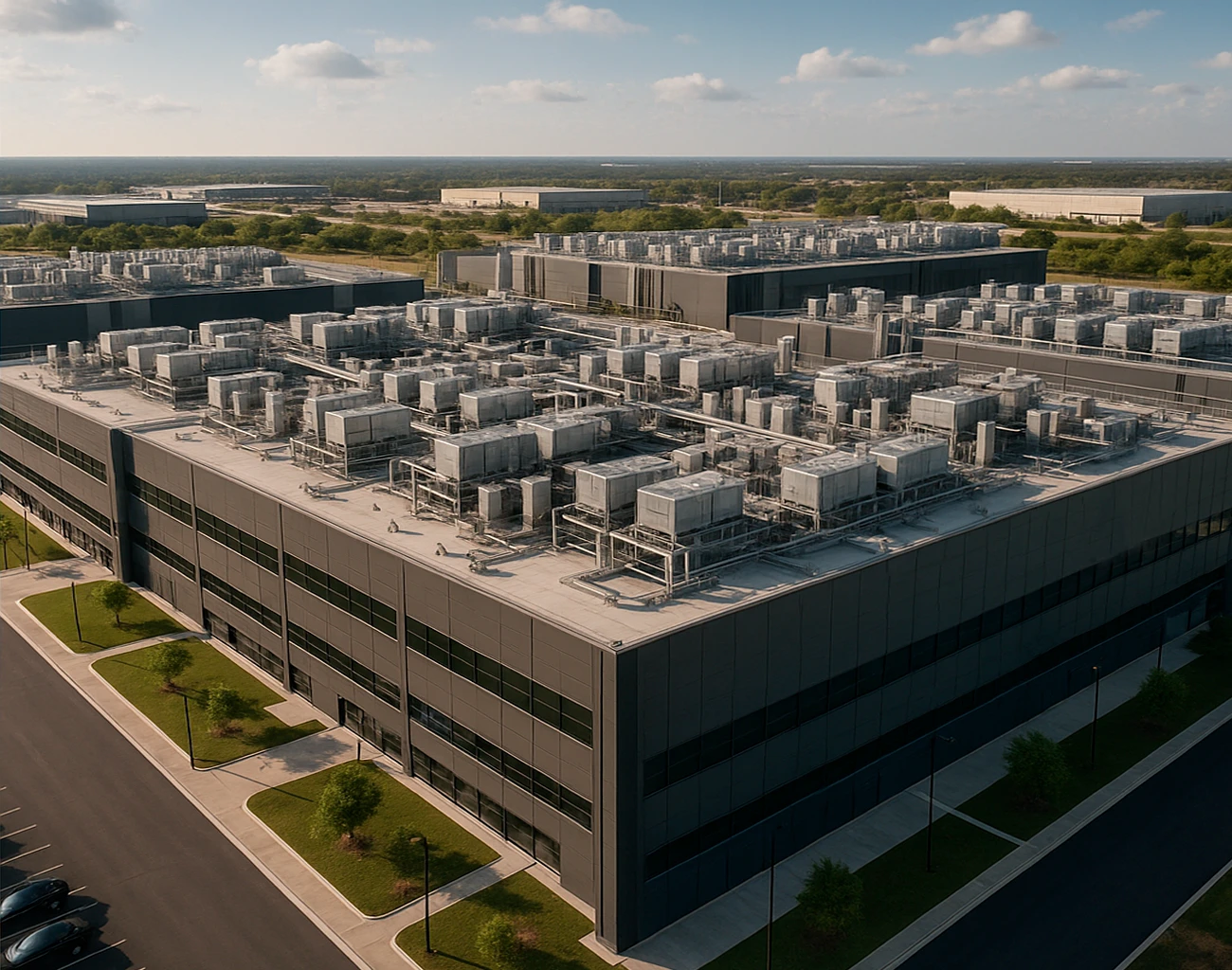
Large players such as Microsoft, Google LLC, Amazon.com, Inc., and Meta Platforms, Inc. focus on the following criteria:
- The ability to build a mega-campus with a capacity of 1 GW or more.
- Access to inexpensive and stable electricity — power requirements for an AI campus can be measured in gigawatts.
- Network logistics and proximity to backbone cables and internet exchange points.
- Regulatory stability, transparent permitting procedures, and availability of land and resources.
In most cases, site selection favors locations outside traditional metropolitan areas, with an emphasis on optimizing total cost of ownership and long-term sustainability.
The role of edge AI infrastructure
Not all AI workloads require hyperscale campuses; distributed infrastructure — the “edge” — is gaining increasing importance. According to the report, the edge data center market will grow from about €10.4 billion in 2023 to roughly €51 billion by 2033 (CAGR ~19.9%).
This means that smaller but strategically important nodes will be deployed closer to users, at the network edge, especially in scenarios requiring low latency (Internet of Things, autonomous systems).
As a result, locations previously unsuitable for large campuses may accommodate “mini AI data centers,” expanding the geographic footprint of the infrastructure.
How the geography of AI centers will evolve in the coming years
The geography of AI data centers is rapidly reshaping under the influence of increasing computational needs, rising energy demands, and stricter connectivity requirements. Leading regions — North America, Europe, and China — continue investing in massive campuses with capacities in the hundreds of megawatts and above to support the growth of AI platforms and cloud services.
New growth hotspots are also emerging. Southeast Asian countries, the Middle East, and parts of Southern Europe are entering a phase of active infrastructure development, attracting operators with access to renewable energy, new subsea cable routes, and flexible regulatory environments.
At the same time, edge infrastructure is expanding, distributing computation closer to end users and reducing the load on backbone regions. This broadens the map — large mega-hubs remain important, but local low-latency sites are becoming equally valuable.
In the coming years, the geography of AI data centers will move toward greater diversification. Key factors will include energy efficiency, access to renewable resources, technological standards, and a region’s ability to scale. As a result, global infrastructure will become more distributed, while its development will take a more strategic, long-term form.

How to Keep Your Tag Heuer Automatic Running Perfectly: A Complete Care Guide

Best Smart Mattress: DeRUCCI, Eight Sleep and Sleep Number Compared

Fixed Income, Variable Markets: What This GrowthDirect Review Tested

Best Perfumes for Men in the UAE Perfect for Evening Wear

How to Choose the Perfect Oval Diamond Engagement Ring: Shape, Style, Gold & Buying Tips

Years Away From the Markets: What a Returning Trader Found When Testing Brent Markets

A Long Term Investor Opens a Trade Account: My Inverset Review

Putting an Inheritance to Work Slowly, With Keystone Wealth Management

How Healthcare SEO Increases Patient Appointments Without Paid Ads

Choosing an Account That Matches How You Trade

Who Is Marlene Knaus? The Untold Story of Niki Lauda’s First Wife

Jacqueline Bernice Mitchell: The Inspiring Story of Jerry Rice’s Ex-Wife

The Best Sales Enablement Platforms to Boost Your Sales Process in 2026

Curious About JOI Database? Read This First Before You Click Anything

Mickey Middleton: The Untold Story of Bryan Cranston’s First Wife

Where Is Barbara Boothe Now? Inside Her Life After Larry Ellison

Who Is Jasmine Williams? Meet Brad Williams’ Amazing Wife

Wendy Lang: Meet the Therapist Married to Cenk Uygur

Where Is Noelle Watters Now? Jesse Watters’ Ex-Wife’s Life After Divorce

Alisande Ullman Today: What Happened After Her Divorce from Leslie Nielsen?
How to Keep Your Tag Heuer Automatic Running Perfectly: A Complete Care Guide
Best Smart Mattress: DeRUCCI, Eight Sleep and Sleep Number Compared
Fixed Income, Variable Markets: What This GrowthDirect Review Tested
Best Perfumes for Men in the UAE Perfect for Evening Wear
How to Choose the Perfect Oval Diamond Engagement Ring: Shape, Style, Gold & Buying Tips
Years Away From the Markets: What a Returning Trader Found When Testing Brent Markets
A Long Term Investor Opens a Trade Account: My Inverset Review
Putting an Inheritance to Work Slowly, With Keystone Wealth Management
How Healthcare SEO Increases Patient Appointments Without Paid Ads
Choosing an Account That Matches How You Trade
-
 Celebrity1 year ago
Who Is Marlene Knaus? The Untold Story of Niki Lauda’s First Wife
-
 Celebrity1 year ago
Jacqueline Bernice Mitchell: The Inspiring Story of Jerry Rice’s Ex-Wife
-
 Business9 months ago
The Best Sales Enablement Platforms to Boost Your Sales Process in 2026
-
 Entertainment1 year ago
Curious About JOI Database? Read This First Before You Click Anything