
Connect with us

Guide

A Guide To The Best CNC Machining Materials

Published

on

A Guide To The Best CNC Machining Materials
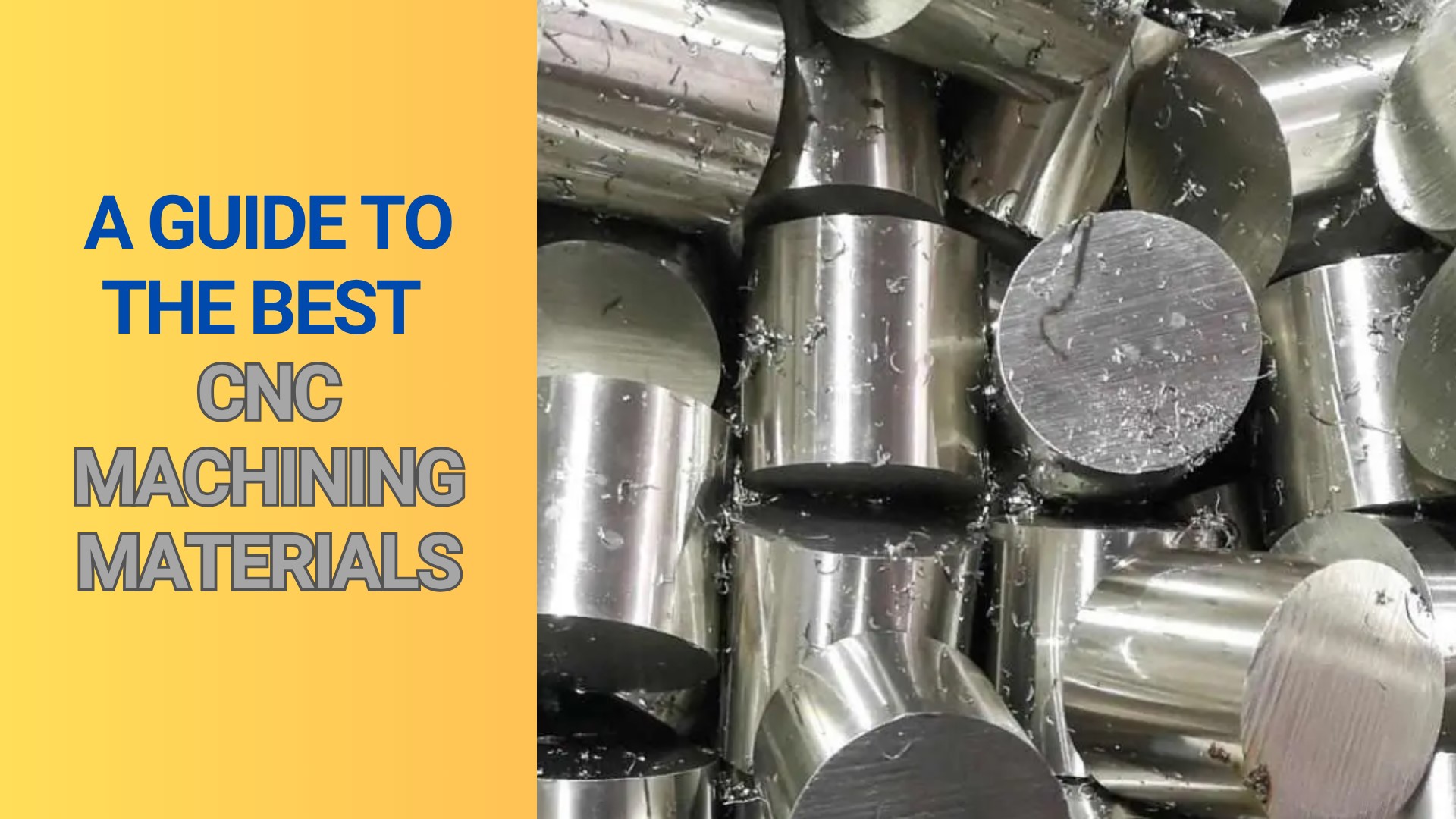
Every machining project has to address the question of the best CNC machining materials to use. While a wide array of material options can excite at first, overlooking the analysis part can bring confusion.  


CNC machining material categories are mainly metals, plastics, and a broad category we can call ‘Others’. Aluminum, stainless steel, brass, and carbon steel are the prominent metals in projects, while plastics include acetal, acrylic, PEEK, and PVC. Other materials include carbon fiber, graphite, and ceramics. 


This article outlines these materials and adds some tips to choose the best CNC machining materials. 

Best Metals For CNC Machining 

Metals are widely CNC-machined materials mainly for their durability and strength. The most common metals for CNC machining are aluminum, stainless steel, brass, carbon steel, bronze, and copper. Others are tool steel, magnesium, and lead.

Aluminum CNC Machined Parts

Aluminum is an excellent material for CNC machining because its parts are lightweight, corrosion-resistant, strong, and cost-effective. Its machined parts, such as aluminum 7075, are widely used in automotive and aerospace industries, among others. 

Stainless Steel CNC Machined Parts

The strength, corrosion resistance, and durability of stainless steel are appealing in CNC machining projects. Metal’s parts can be found in kitchenware, medical equipment, and many other areas. 


Stainless steel parts


Brass CNC Machined Parts

The perfect machinability and attractive appearance of brass make the material popular in decorative parts. Its CNC-machined parts are also common in valves and gearing setups. It is a cost-effective material to deal with, particularly because tool wear is minimal. 

Carbon Steel CNC Machined Parts

Low-carbon steel and medium-carbon steel are easier to machine, but their strength is less than that of high-carbon steel. The three grades of carbon steel may have poor corrosion resistance, but you can always align the specific properties with the type of CNC-machined part you want.


For instance, HCS is best for cutting tools and springs, while LCS works best as a car panel or a structural part.  

Bronze CNC Machined Parts

The main alloys of bronze are copper and tin; thus, it is a durable material. Bronze also makes smooth parts of tight tolerances because of its lead element. 


Copper CNC Machined Parts

Different copper grades are used as machining materials, the main ones being C36000, C101, and C110. As a conductive, malleable, and ductile material, copper finds use in plumbing, decorative, and conductive parts. 

Tool Steel CNC Machined Parts

Tool steel has incredible hardness, so machining it requires a special approach. The material can be drilled, milled, and turned, but the machinist must follow some guidelines. For instance, the cutting parameters and tool geometry must be optimized. 

Magnesium CNC Machined Parts

Like aluminum, magnesium is lightweight and easy to machine. CNC machining services can be used to get quality magnesium parts for steering in automotive, gearboxes in aerospace, and orthopedic tools, among many others. 


Magnesium alloy part


Lead CNC Machined Parts

Lead is one of the popular CNC machining materials in medical, aerospace, and communications. This material is soft and easy to machine, so turning it into usable parts is not challenging. However, it is mostly used in battery parts and radiation shielding. 

Best Plastics For CNC Machining 

Plastics generally have low melting points and, therefore, are not suitable for CNC machining, but there are several that meet the machining requirements. Examples of CNC-machinable plastics are acetal, nylon, Polyether ether ketone (PEEK), Polyethylene (PE), Polyethylene terephthalate (PET), Polyvinyl chloride (PVC), and Polyoxymethylene (POM). 


Here’s a table summarizing the properties of these plastics for CNC machining: 


Plastic Material Key Properties Common Applications
Acetal (POM) High strength, low friction, chemical resistance Automotive parts, precision mechanical components
ABS strong, lightweight, machinable Prototyping, electronic housings, consumer products
Acrylic (PMMA) weather-resistant, lightweight, brittle Windows, lenses, signage
Delrin (POM-H) low moisture absorption, machinable Gears, valves, medical devices
HDPE Chemical-resistant, impact-resistant, lightweight Cutting boards, marine components, sports equipment
Nylon (PA) Tough, wear-resistant, self-lubricating Bushings, rollers, mechanical parts
PEEK temperature-resistant, biocompatible, strong Aerospace parts, medical implants, 
Polycarbonate (PC) impact strength, transparent, temperature resistant electronic parts, automotive headlights, medical devices
PTFE (Teflon) Chemically inert, temperature-resistant Seals, gaskets, and electrical insulation
UHMW-PE High impact, chemical-resistant,  conveyor parts, marine fenders


Other CNC Machining Materials

Other materials for CNC machining include carbon fiber, wood, graphite, ceramics, rubber, silicone, stone, epoxy resins, and gypsum. There are instances where these materials are preferable to metals and plastics, for instance, ceramics in high-temperature applications and composites for high strength-to-weight ratio in aerospace. 

Carbon Fiber

 This stiff and thermally stable material can be machined under special circumstances to form parts for specialized use, for example, in drones and electronics. 


Machining carbon fiber sheet

Wood

CNC-machined wood parts are easy to make. Their applications are mostly in engravings and furniture products. 

Graphite

Graphite can be expertly CNC machined to produce crucial parts, for example, electrical discharge machining (EDM) electrodes. 


Graphite electrodes for EDM


Ceramics

The high thermal stability of ceramics, plus the fact that these materials can be CNC-machined into usable parts, makes them valuable in the medical and aerospace industries. 

RubberMany types of rubber can be used for CNC-machined parts. The material’s properties are suitable for parts in automotive, aerospace, industrial, and medical applications. 

Silicone

Silicone is renowned for its flexibility, yet this property can make the machining process challenging. However, using expert CNC milling and turning strategies and sharp tools helps create reliable parts for electronics, aerospace, medical, and many other industries. 

Stone

CNC-machined stone parts are useful for decorative parts. Options like marble, soapstone, quartzite, and limestone can be machined cost-effectively. 

Epoxy Resins

Epoxy CNC machining materials are versatile, tough, and resistant to demanding conditions. Standard epoxy resins are machinable and widely used in light applications. Proper heat management and dust control during machining are required. 

Tips To Choose The Best Material For CNC Machining 

Top CNC machining service providers like ProleanMFG use the following approaches to choose CNC machining materials: 

  • Balance strength-to-weight ratios for optimal performance 
  • Assess the requirement for resistance to chemicals and corrosion 
  • Evaluate the material’s resistance to abrasion and wear
  • Analyze the load and mechanical stress requirements 
  • Consider the part’s operating environment compared to the material’s thermal performance, for instance, jet engines


A section of a jet engine


Conclusion 

Mastering different materials for CNC machining paves the way for creative and reliable approaches to making parts for different applications. By understanding material capabilities, applicable CNC machining technologies, the best practices for CNC machining, and so on, you can attain the desired precision and quality every time.

Continue Reading

Categories

Trending