Business
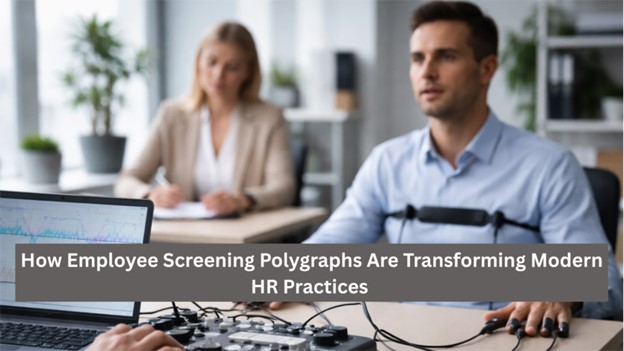
How Employee Screening Polygraphs Are Transforming Modern HR Practices
Published
2 weeks agoon
By
Admin
Hiring these days is more complicated than ever. You sift through resumes that look perfect, conduct interviews that sound convincing, and still wonder if you are seeing the full picture. Misrepresentation, insider threats, and integrity issues continue to cost organizations time, money, and trust.
At the same time, you have to balance speed, fairness, and compliance, all while safeguarding the culture in your workplace. Because of these pressures, traditional screening methods tend to seem insufficient. That is where the modern tools are changing how decisions are taken. Among them, employee screening polygraphs are attracting attention for their capacity to fill gaps that interviews and background checks may not be able to fill.
This article delves into the ways in which employee screening polygraphs are changing HR practices as we know them and what that change means for you as an employer or HR professional.
1. Strengthen Pre-Employment Integrity Checks
When you move from interviews to actually hiring decisions, there is often uncertainty. Candidates can exaggerate experience, omit past misconduct, or get sensitive information wrong. At the same time, it is important to recognize that, in the United States, employment-related polygraph tests are heavily restricted by the Employee Polygraph Protection Act (EPPA) and are only allowed to be used in certain legally defined situations.
Within those limited and lawful contexts—such as certain security-sensitive roles or investigations involving controlled substances—a polygraph test can serve as a structured method to verify claims that directly affect job eligibility. Rather than replacing interviews or background checks, polygraphs are used selectively to complement existing screening methods. They focus on predefined, job-relevant issues such as theft history, falsified credentials, or serious policy violations, and only when employment law explicitly allows their use.
This careful application adds an additional layer of clarity without overstepping legal or ethical boundaries. Candidates are informed in advance about the scope and purpose of the screening, which promotes transparency from the outset. Over time, this approach can improve the overall quality of hiring decisions while ensuring compliance, fairness, and respect for employee rights.
2. Reduce Risk in High-Trust Roles
Some roles involve greater degrees of responsibility. Positions that involve cash handling, sensitive information, or access to controlled assets require a greater level of protection. Without them, even a single bad hiring decision can have long-term consequences.
In roles where enhanced vetting is legally justified, employee screening polygraphs help you detect risk early. By addressing relevant behavioral concerns prior to onboarding, you help mitigate the risks of fraud, data breaches, and internal theft.
At the same time, this process supports accountability. Candidates know that trust is earned and not assumed. Consequently, you develop teams in which responsibility is taken seriously from day one.
3. Support Fair and Consistent Hiring Decisions
Bias, both consciously and subconsciously, continues to be a challenge in hiring. Even well-organized interviews may suffer from personal impressions or styles of communication. With time, this inconsistency undermines standards of hiring.
When used within clearly defined legal and procedural boundaries, polygraph screening adds the element of standardization. Each candidate is evaluated with the same criteria and procedures, which helps you to be fair. Instead of basing decisions on purely subjective judgment, you base them on substantiated results.
Furthermore, consistency ensures your organization. When the hiring decisions are defensible and well-documented, you will reduce the chances of disputes and internal dissatisfaction.
4. Enhance Workplace Safety and Culture
A safe workplace starts with trustworthy individuals. When issues of integrity do make it past screening, they usually manifest themselves later in the form of conflicts, misconduct, or security incidents. These problems interrupt teams and destroy morale.
By using employee screening polygraphs, you send a message that ethical behavior is important. This message influences the culture in the workplace long before problems occur. Employees are more secure knowing that their colleagues were vetted based on rigorous standards.
In addition, early detection of risk factors prevents reactive management. Instead of solving issues after the damage has occurred, you turn your attention to prevention, which builds the long-term health of the organization.
5. Improve Investigative Efficiency in HR
Internal investigations are not easy. They consume time, strain relationships, and, often, are based on incomplete information. Without the right tools, HR teams may have trouble coming to a clear conclusion.
Polygraph testing helps investigations by narrowing down uncertainty. If used in the right way, it aids in focusing facts, dispelling false assumptions, and targeting attention where it is most needed. This efficiency helps you to solve the problems more quickly and with higher confidence.
Importantly, the process is organized and recorded. That structure serves to protect both the organization and employees to make sure that investigations are professional, focused, and fair.
6. Align with Modern Compliance and Ethical Standards
As regulations evolve, HR practices must adapt. Employee screening methods now require clear policies, informed consent, and strict adherence to employment law, particularly in jurisdictions where polygraph testing is heavily regulated.
Modern polygraph screening emphasizes compliance and ethics. Clear guidelines define when testing is appropriate, what topics are covered, and how results are handled. This clarity ensures that screening supports, rather than undermines, ethical hiring.
Additionally, informed consent builds trust. When candidates understand the process and its purpose, participation becomes a professional exchange rather than a source of anxiety.
Conclusion
More importantly, adopting this approach encourages proactive HR leadership. Instead of reacting to incidents after they occur, you position your organization to anticipate challenges before they escalate. This shift not only saves resources but also strengthens trust between management and employees, as decisions are grounded in structured and transparent processes rather than assumptions.
Ultimately, as hiring risks grow more complex, HR practices must evolve with equal precision. When used selectively, lawfully, and responsibly, employee screening polygraphs offer a focused, ethical, and compliance-aware way to close credibility gaps without compromising professionalism. When used responsibly, they become less about control and more about building a workforce rooted in integrity, accountability, and long-term stability.
Call My Doctor Health Care LLC Sets a New Standard for Home Healthcare in Dubai
StableProxy Review: What Is It and Why You Might Need It in 2026
Recording Apps: Best Picks for Audio Capture in Screen Recording (2026 Guide)
7 Curb Appeal Improvements Your Home Might Be Crying Out For
Why Ahmedabad is a Must Visit City in India?
Trend vs Investment: Which Watch Features Stay Stylish for Years (Crystal, Case, Dial, Bracelet)
Corporate Reputation Management and the Cost of AI-Generated Errors
Hidden Costs of Economy Umrah Packages: A Breakdown of Extra Fees
RF PCB Solutions: How FastTurn PCB Powers High-Frequency Electronics with Precision
Why Bamboo Skewers Are Becoming Essential in the Modern Food Industry
Who Is Marlene Knaus? The Untold Story of Niki Lauda’s First Wife
Jacqueline Bernice Mitchell: The Inspiring Story of Jerry Rice’s Ex-Wife
Curious About JOI Database? Read This First Before You Click Anything
Mickey Middleton: The Untold Story of Bryan Cranston’s First Wife
Where Is Barbara Boothe Now? Inside Her Life After Larry Ellison
Wendy Lang: Meet the Therapist Married to Cenk Uygur
Alisande Ullman Today: What Happened After Her Divorce from Leslie Nielsen?
Where Is Noelle Watters Now? Jesse Watters’ Ex-Wife’s Life After Divorce
Should You Use Wooflix in 2025? Honest Review and Best Alternatives
Where Is Tanya Hijazi Now?: All About Rick James’ Former Wife
Call My Doctor Health Care LLC Sets a New Standard for Home Healthcare in Dubai
StableProxy Review: What Is It and Why You Might Need It in 2026
Recording Apps: Best Picks for Audio Capture in Screen Recording (2026 Guide)
7 Curb Appeal Improvements Your Home Might Be Crying Out For
Why Ahmedabad is a Must Visit City in India?
Trend vs Investment: Which Watch Features Stay Stylish for Years (Crystal, Case, Dial, Bracelet)
Corporate Reputation Management and the Cost of AI-Generated Errors
Hidden Costs of Economy Umrah Packages: A Breakdown of Extra Fees
RF PCB Solutions: How FastTurn PCB Powers High-Frequency Electronics with Precision
Why Bamboo Skewers Are Becoming Essential in the Modern Food Industry
Categories
Trending
-
Celebrity8 months agoWho Is Marlene Knaus? The Untold Story of Niki Lauda’s First Wife
-

Celebrity5 months agoJacqueline Bernice Mitchell: The Inspiring Story of Jerry Rice’s Ex-Wife
-
Entertainment6 months agoCurious About JOI Database? Read This First Before You Click Anything
-

Celebrity6 months agoMickey Middleton: The Untold Story of Bryan Cranston’s First Wife