
Technology
NoteGPT Audio to Text Converter: Transform Your Meetings into Actionable Notes

I’ve lost count of how many times I walked out of a long meeting thinking, “Wait, did we decide on that deadline?” or “What exactly did the client want changed?” It’s frustrating, and honestly, a huge time-waster. I used to rely on messy handwritten notes or quick voice memos that I never had time to listen back to.
Eventually, I started using transcription tools. Some were slow. Some misunderstood half the conversation. Some felt like they were built a decade ago. It wasn’t until I tried NoteGPT’s Audio to Text Converter that things finally clicked.
What I like most is that it feels built for real people with real workloads—not just a shiny AI demo. Whether you’re trying to convert Audio to Text (https://audioconverter.ai/) from a meeting, a lecture, or a podcast episode, the tool focuses on speed, accuracy, and actual usability.
This article walks through how it works, who it’s perfect for, and why it solves pain points that every professional or student has probably dealt with.
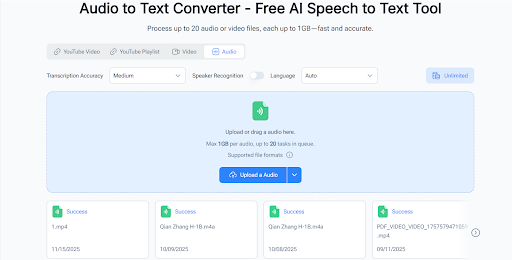
(NoteGPT Audio to Text Converter )
Why Transcribing Audio Matters More Than We Admit
Keeping Track of Details Without Stress
There’s something almost impossible about talking, listening, thinking, and taking notes all at once. In fast-moving team calls, you miss details. During long lectures, your hand cramps. When interviewing someone, stopping to write ruins the conversation flow.
Transcription fills that gap. It lets you stay present while still capturing every detail. With NoteGPT, the accuracy is high enough that I trust the transcript more than my own memory.
Saving Hours Every Week
If you’ve ever tried to manually transcribe even a 10-minute recording, you know how painful it is. It can take three, four, sometimes five times longer than the audio itself. That’s why a lot of people simply avoid it.
With NoteGPT’s Audio to Text Converter, transcription becomes something you can do in the background while you focus on your actual tasks. You upload the file, wait a moment, and the text is ready. No struggle, no rewinding a hundred times.
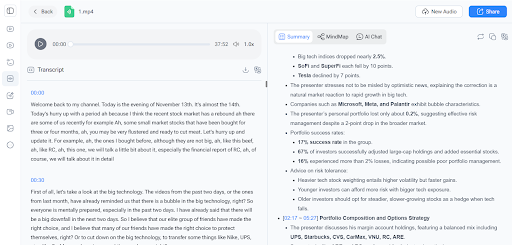
(NoteGPT Convert Audio to Text)
Real Scenarios Where NoteGPT Makes a Difference
1. Business Meetings and Team Calls
Team calls move fast. Everyone’s talking, decisions are made quickly, and you’re expected to keep track of everything.
Instead of scrambling to write notes, you record the meeting, upload it, and let NoteGPT transcribe it. It handles multiple speakers, accents, and even overlapping voices surprisingly well.
You end up with a clean transcript you can skim, search, or send to teammates who missed the call. That alone makes internal communication smoother.
2. Academic Lectures and Study Sessions
Students know the pain of typing notes while trying to understand complex material. You miss half the explanation because you’re too busy capturing the first half.
With NoteGPT, you can record the lecture and focus on listening. After class, just Convert Audio to Text, then use the transcript for revision or summaries. It’s also great for online courses, especially ones that don’t offer captions.
3. Interviews for Journalism, Research, or HR
Interviewers often deal with long recordings. Transcribing by hand can eat an entire afternoon.
Using NoteGPT solves that instantly. Upload your interview, wait briefly, and you’re ready to highlight quotes, pull insights, or build an article or report. It’s a simple workflow that saves enormous time.
4. Podcasts, YouTube Scripts, and Content Creation
Creators often need transcripts for SEO, blog repurposing, editing scripts, or accessibility.
The Audio to Text Converter can take an entire episode or raw recording and turn it into text you can edit and reshape. It cuts hours off post-production and makes repurposing content genuinely easy.
5. Customer Support and Sales Teams
Lots of sales calls and support sessions are recorded but rarely used effectively. Transcribing them makes it possible to extract objections, track customer patterns, and train new team members using real conversations.
What Makes NoteGPT Stand Out
High Accuracy Without Overcomplicated Settings
You’ve probably used tools that force you to adjust dozens of settings just to get a decent transcription. NoteGPT avoids that problem.
You upload your file, pick your language, and let it handle the rest.
No long setup. No confusing menus.
Just clean, dependable transcription.
Handles Different Accents and Real-World Audio
One thing I immediately noticed is that NoteGPT doesn’t panic when the audio isn’t “perfect.” People talk fast, interrupt each other, switch languages, or talk in noisy environments. The tool still performs well thanks to strong speech recognition and noise handling.
Batch Processing for Heavy Workloads
If you deal with dozens of recordings—research teams, podcasters, call centers—batch processing is a lifesaver. You can upload multiple files and let NoteGPT process them all automatically. No babysitting required.
Multiple Export Options
After transcribing, you can export your text as:
- TXT
- DOCX
- SRT (for captions)
- Or work directly inside NoteGPT
This makes it flexible for both professional and academic tasks.
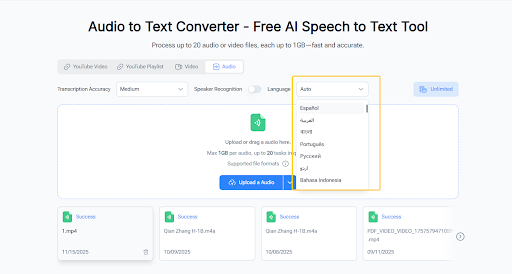
(NoteGPT Audio to Text Converter with Multi-Language Support)
How to Use NoteGPT Efficiently
Step 1: Upload Your Audio
Drag and drop your recording onto the page. It works with MP3, WAV, M4A, and several other common formats.
Step 2: Pick the Language and Settings
Choose your language, whether you want speaker identification, and the accuracy mode. Steering clear of overly complex options keeps it smooth for beginners but still powerful for experts.
Step 3: Let AI Do the Work
This is the part I like: you wait a short moment, and the transcript appears. You can edit directly on the screen or export it for later.
Step 4: Review and Use It
Search for keywords, highlight important moments, or use the transcript to build summaries, action items, articles, or captions.
Tips That Improve Transcription Quality
Even though the system is strong, a few habits help you get the cleanest output:
- Use a stable microphone when possible.
- Try to reduce background noise.
- Let speakers finish sentences to avoid overlap.
- Keep the recording device close to the sound source.
- Clarify technical terms during the conversation if you plan to rely heavily on exact vocabulary.
Small improvements during recording lead to noticeably better transcripts.
Why This Tool Helps in Real Work
Saves Time You Actually Feel
Shaving hours off transcription work is something you notice immediately. Instead of spending your energy on typing, you use it to think, plan, write, or analyze.
Helps Teams Stay Organized
Shared transcripts make it easy for teams to get aligned. No more relying on someone’s shorthand notes or memory.
Makes Audio Content Searchable
Once your audio becomes text, you can search for keywords instantly. This is especially useful for big projects or long recordings.
Accessibility and Compliance
Transcripts help you meet accessibility requirements and provide better experiences for people with hearing challenges.
Conclusion
At the end of the day, transcription isn’t just about converting sound into words. It’s about freeing up your brain, reducing stress, and improving how you work or study.
NoteGPT’s Audio to Text Converter (https://notegpt.io/audio-to-text-converter) does exactly that. It gives you fast, accurate, and easy-to-use transcription that fits naturally into your daily workflow. Whether you’re handling meetings, lectures, interviews, or creative projects, being able to Convert Audio to Text (https://audioconverter.ai/) in minutes changes everything.
If you’ve been searching for a tool that doesn’t get in your way and actually helps you stay organized, NoteGPT is worth trying.

Open House Viewings What Buyers Should Expect

How Concierge Amenities Are Driving Resident Retention in Multifamily Housing

Talking Photo Online Free AI: Step-by-Step Guide to Using Talking Photo AI Tools

Streamlining Information Retrieval with Disqover Connector Search

Discover Modern Streetwear Style with Guiding Cross

Guiding Cross: Premium Apparel Designed for Everyday Comfort

SD Card Recovery Tool Mac: Free Options to Recover Lost Files Easily

Why Aeration Is the Missing Step in Your Lawn Care Routine

Data Analytics Has Become a Core Pillar of Business Scaling in the UK’s Digital Economy

Why Education Around Consent Is Key in Preventing Misconduct

Who Is Marlene Knaus? The Untold Story of Niki Lauda’s First Wife

Jacqueline Bernice Mitchell: The Inspiring Story of Jerry Rice’s Ex-Wife

Curious About JOI Database? Read This First Before You Click Anything

Mickey Middleton: The Untold Story of Bryan Cranston’s First Wife

Where Is Barbara Boothe Now? Inside Her Life After Larry Ellison

Wendy Lang: Meet the Therapist Married to Cenk Uygur

Who Is Jasmine Williams? Meet Brad Williams’ Amazing Wife

Where Is Noelle Watters Now? Jesse Watters’ Ex-Wife’s Life After Divorce

Alisande Ullman Today: What Happened After Her Divorce from Leslie Nielsen?

Where Is Tanya Hijazi Now?: All About Rick James’ Former Wife
Open House Viewings What Buyers Should Expect
How Concierge Amenities Are Driving Resident Retention in Multifamily Housing
Talking Photo Online Free AI: Step-by-Step Guide to Using Talking Photo AI Tools
Streamlining Information Retrieval with Disqover Connector Search
Discover Modern Streetwear Style with Guiding Cross
Guiding Cross: Premium Apparel Designed for Everyday Comfort
SD Card Recovery Tool Mac: Free Options to Recover Lost Files Easily
Why Aeration Is the Missing Step in Your Lawn Care Routine
Data Analytics Has Become a Core Pillar of Business Scaling in the UK’s Digital Economy
Why Education Around Consent Is Key in Preventing Misconduct
-
 Celebrity9 months ago
Who Is Marlene Knaus? The Untold Story of Niki Lauda’s First Wife
-
 Celebrity6 months ago
Jacqueline Bernice Mitchell: The Inspiring Story of Jerry Rice’s Ex-Wife
-
 Entertainment8 months ago
Curious About JOI Database? Read This First Before You Click Anything
-
 Celebrity7 months ago
Mickey Middleton: The Untold Story of Bryan Cranston’s First Wife