
Business
Street Mosaics: How Urban Artists Are Reinventing an Ancient Craft

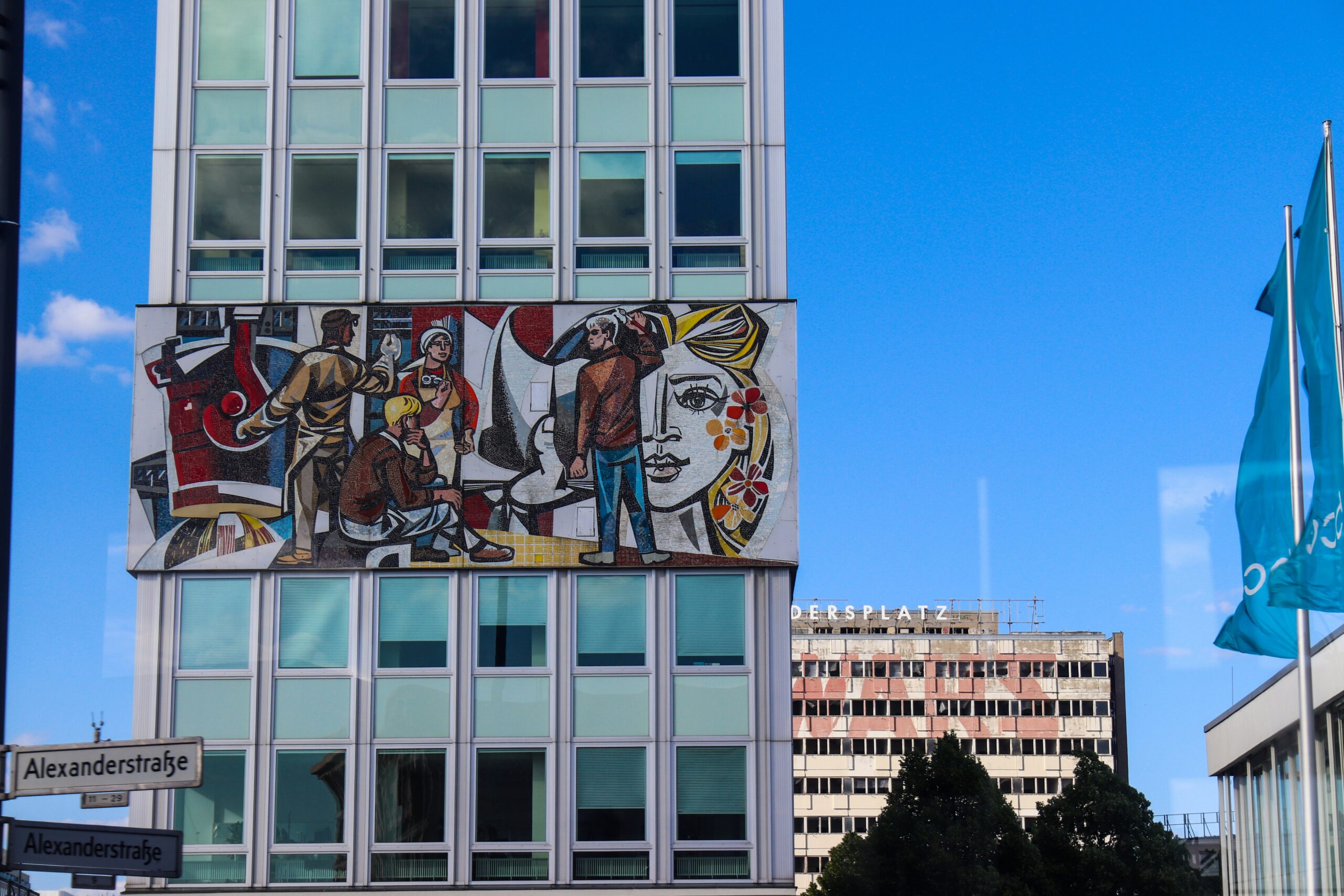
For centuries, mosaics were synonymous with permanence. They adorned Roman villas, Byzantine churches, and palaces designed to outlast empires. Today, that same medium is being reimagined by urban artists who trade sacred ceilings for subway tunnels and archaeological sites for overlooked sidewalks. The result is one of the most unexpected evolutions in contemporary travel: cities becoming open-air galleries of an art form that predates them. Mosaics is an exciting and less famous form of a street art: even though it often goes unnoticed, it totally changes the way how you move through the city once you start paying attention.
The pixelated pioneers
No conversation about street mosaics begins anywhere other than with Invader. His work has become a kind of global scavenger hunt, transforming cities into playgrounds of pixelated nostalgia.
Since the late 1990s, Invader has been installing small, tile-based mosaics inspired by 8-bit video games in cities around the world. His “Space Invaders” project spans more than 60 cities, turning urban landscapes into interactive maps of discovery.
What makes his work so compelling is its placement and an invitation for discovery. A tiny alien might perch above a street sign in Paris, or hover inconspicuously on a building façade in Tokyo. You don’t visit his work in the traditional sense, you encounter it. And in doing so, you become part of a global community of observers, quietly scanning walls for signs of invasion.
His mosaics are deliberate, site-specific, and surprisingly durable. Tiles, after all, are meant to last. That permanence gives his work an unusual tension: it exists in the fleeting, often unauthorized world of street art, yet resists the ephemerality typically associated with it.
Repairing cities, one tile at a time
If Invader turned mosaics into a global game, artists like Ememem in Lyon have turned them into acts of care.
In cities like Lyon, Paris, and beyond, a growing movement of mosaic artists is quietly transforming urban decay into something unexpectedly beautiful. Instead of ignoring cracks, potholes, and broken surfaces, they fill them with intricate tile work. Ememem calls this practice “flacking,” a poetic kind of repair that blends craftsmanship with urban intervention.
This isn’t just decoration. It’s a reimagining of what public space can be. A fractured sidewalk becomes a canvas. A pothole becomes a story. And a city that might otherwise feel worn down suddenly carries moments of surprise and care.
The movement has spread globally, with artists in cities from Chicago to London embedding mosaics into neglected corners, often without official permission. Their work brings color, humor, and a sense of human touch to environments that can feel impersonal or forgotten.
From ancient craft to urban language
What makes mosaics so uniquely suited to street art is their history. Thousands of years ago, artisans arranged tiny pieces of stone and glass, tesserae, into elaborate scenes of mythology, daily life, and spiritual belief. Today’s street mosaicists are doing something remarkably similar, just with different subject matter and settings.
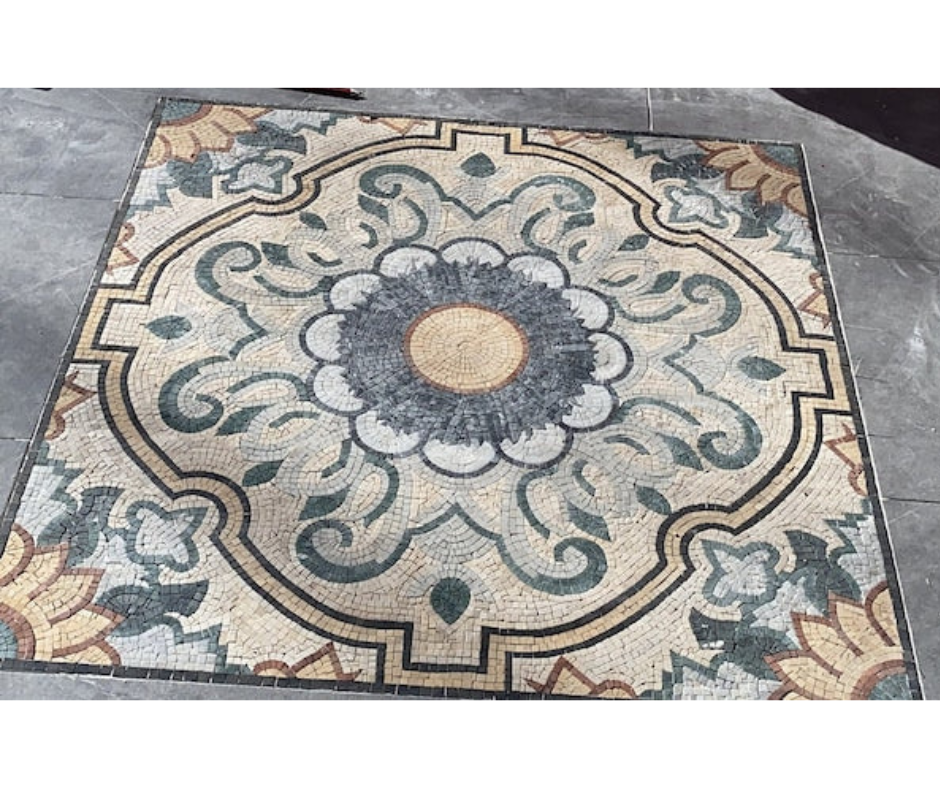
In Barcelona, the legacy of Antoni Gaudí looms large. His use of trencadís, a mosaic technique made from broken ceramic tiles, helped define the city’s visual identity. Walk through Park Güell or along certain façades, and you see how fragments can become something cohesive, even magical.
Modern street artists have taken that philosophy and pushed it further. Instead of carefully curated architectural spaces, they work with whatever the city gives them: brick, concrete, steel. Their materials are often scavenged or repurposed. Their canvases are unpredictable.
And yet, the core idea remains unchanged. Small pieces, brought together, create something larger than themselves.
Mosaics for the public spaces
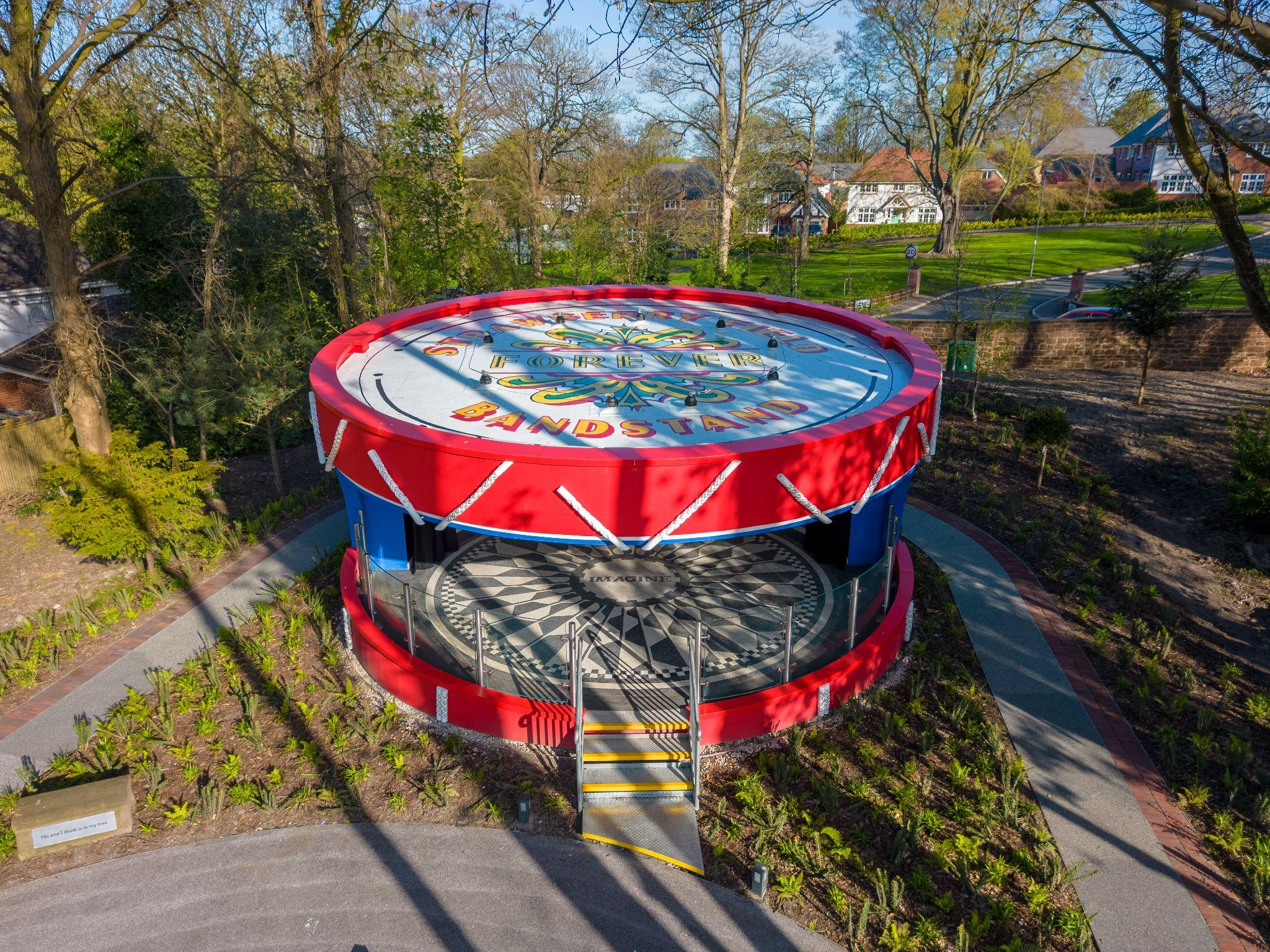
Not all contemporary mosaics are guerrilla interventions. Some are deeply intentional, rooted in place and memory, yet still accessible to anyone who happens to pass by.
In Woolton, a suburb of Liverpool, the grounds of Strawberry Field that is forever linked to John Lennon, have gained a new focal point and a gathering space for local community. Created by the company Mozaico, the Imagine project is a monumental circular mosaic installed in a bandstand, inspired by the iconic design in New York’s Central Park.
The piece spans over six meters in diameter and is composed of hundreds of thousands of individual tiles, each placed by hand. It draws on ancient Greco-Roman traditions while translating them into a contemporary public setting.
Unlike the hidden mosaics of street artists, this one invites gathering. It’s a place to stand, to sit, to listen to music and share beautiful moments. It carries the same message as its New York counterpart: peace, reflection, imagination, continuing the legacy of John Lennon.
A craft that refuses to disappear
There’s an irony in the resurgence of mosaics. In an era dominated by digital imagery, speed, and disposability, this is a medium defined by patience and permanence.
Each tile must be placed by hand. Each composition takes time. Even the smallest piece represents hours of work. And yet, instead of fading into history, mosaics are thriving in one of the most dynamic, fast-moving art forms of our time.
Street artists have embraced the contradiction. They use an ancient technique to comment on modern life. They create works that are both fragile and enduring, vulnerable to removal yet resistant to decay. In doing so, they’ve expanded what street art can be: it’s no longer just paint on a wall. It’s texture, material, and timeless craft.

Street Mosaics: How Urban Artists Are Reinventing an Ancient Craft

The Silver Economy: How the Geriatric Sector Is Redefining Modern Business

How Implementing RFP Software Transforms Business Processes?

How North East Landscaping Services Transforms Outdoor Spaces

Lightweight Feathered Crochet Hair – The Secret to Natural-Looking Braids

Building an Intelligent Contact Center: The Role of Generative AI in 2026 and Beyond

Residential EV Charger Installation Sunderland With Green Spark Electrics

How a Tuition Centre in Bukit Timah Supports Student Learning

Best Salon Hair Treatments for Dry and Damaged Hair

What Is the Optimal Ratio of Bouncy Castles to Inflatable Slides for a Growing UK Hire Business?

Who Is Marlene Knaus? The Untold Story of Niki Lauda’s First Wife

Jacqueline Bernice Mitchell: The Inspiring Story of Jerry Rice’s Ex-Wife

Curious About JOI Database? Read This First Before You Click Anything

Mickey Middleton: The Untold Story of Bryan Cranston’s First Wife

Where Is Barbara Boothe Now? Inside Her Life After Larry Ellison

Wendy Lang: Meet the Therapist Married to Cenk Uygur

Who Is Jasmine Williams? Meet Brad Williams’ Amazing Wife

Where Is Noelle Watters Now? Jesse Watters’ Ex-Wife’s Life After Divorce

Alisande Ullman Today: What Happened After Her Divorce from Leslie Nielsen?

Where Is Tanya Hijazi Now?: All About Rick James’ Former Wife
Street Mosaics: How Urban Artists Are Reinventing an Ancient Craft
The Silver Economy: How the Geriatric Sector Is Redefining Modern Business
How Implementing RFP Software Transforms Business Processes?
How North East Landscaping Services Transforms Outdoor Spaces
Lightweight Feathered Crochet Hair – The Secret to Natural-Looking Braids
Building an Intelligent Contact Center: The Role of Generative AI in 2026 and Beyond
Residential EV Charger Installation Sunderland With Green Spark Electrics
How a Tuition Centre in Bukit Timah Supports Student Learning
Best Salon Hair Treatments for Dry and Damaged Hair
What Is the Optimal Ratio of Bouncy Castles to Inflatable Slides for a Growing UK Hire Business?
-
 Celebrity10 months ago
Who Is Marlene Knaus? The Untold Story of Niki Lauda’s First Wife
-
 Celebrity7 months ago
Jacqueline Bernice Mitchell: The Inspiring Story of Jerry Rice’s Ex-Wife
-
 Entertainment9 months ago
Curious About JOI Database? Read This First Before You Click Anything
-
 Celebrity8 months ago
Mickey Middleton: The Untold Story of Bryan Cranston’s First Wife