Connect with us

Blog

The Counter Height Comeback: Why Prime UK Kitchens Are Raising the Bar

Published

on

The British kitchen has always been more than a place to cook. It is where morning light lands first, where tea is poured without ceremony, where conversations drift between tasks and laughter lingers longer than planned. For years, design conversations circled islands, marble worktops, and open shelving. Yet quietly, almost without announcement, another detail has been rising in status and stature.

In modern homes, counter height bar stools are back; they are no longer a compromise between comfort and convenience. It is becoming the defining line between function and flow, between everyday ritual and refined design. From Georgian townhouses in London to sleek waterfront apartments in Manchester anddesign-ledd renovations in Edinburgh, counter-height stools are reshaping how kitchens feel and how families move within them.

This is not simply a furniture shift. It is a lifestyle adjustment, subtle yet transformative.

A Height That Changes the Mood of a Room

There is something about sitting slightly elevated that alters perspective. At roughly 36 inches high, counter height surfaces create a gentle boundary between cooking and gathering. You are close enough to participate, yet comfortably positioned as an observer.

Traditional dining tables are typically 30 inches. Bar height counters, often reaching 42 inches, can feel detached or formal in a domestic setting. Counter height strikes a balance. It feels sociable without being staged. It invites leaning, lingering, and informal dining without the theatrical energy of a pub-style bar.

In many high-end UK renovations, designers are now choosing counter-height islands specifically to encourage interaction. It allows children to complete homework while a simmering pan is in view. Guests can sip wine while remaining part of the conversation, not perched awkwardly above it.

This middle ground is precisely why the comeback feels so natural. It restores intimacy without sacrificing modern form.

Prime Postcodes and the Rise of Elevated Living

Luxury property markets often signal broader design trends. In areas such as Kensington and Knightsbridge, kitchen renovations increasingly emphasize layered seating arrangements. Estate agents report that open-plan kitchens remain one of the strongest selling features in homes above £1 million. Within those spaces, counter-height islands consistently photograph better, feel more proportional, and offer stronger visual symmetry.

Design studios influenced by events like the London Design Festival have highlighted adaptable living spaces as a core theme. Flexibility is the new luxury. A kitchen must transition from weekday breakfasts to evening entertaining without rearranging the room.

Counter height seating answers that demand:

  • It visually anchors the island without overwhelming sightlines
  • It provides ergonomic comfort for everyday use
  • It maintains a clean horizontal line that complements shaker, slab, and contemporary cabinetry alike

In properties where square footage is at a premium, especially in converted Victorian terraces, the slightly raised surface subtly separates zones without the need for walls or partitions. The result feels intentional rather than improvised.

The Psychology of Sitting Higher

Beyond aesthetics, there is a psychological dimension to this shift. Studies in environmental design suggest that subtle elevation changes can influence perception of authority and engagement. While a kitchen is not a boardroom, the effect remains relevant. Sitting at counter height creates a sense of attentiveness. You are neither fully relaxed in a dining chair nor standing to leave. You occupy a transitional space.

This transitional quality mirrors modern British living. Remote work has blurred the lines between professional and personal environments. Kitchens now host laptops alongside kettles. Counter-height stools provide posture support that is better suited to short work sessions than soft lounge seating.

The United Kingdom furniture market continues to expand steadily, with residential kitchen upgrades representing a significant share of annual interior spending. Home improvement investment has remained strong since 2020, and homeowners are prioritising multifunctional layouts. Counter height configurations respond directly to that shift.

Materials That Signal Sophistication

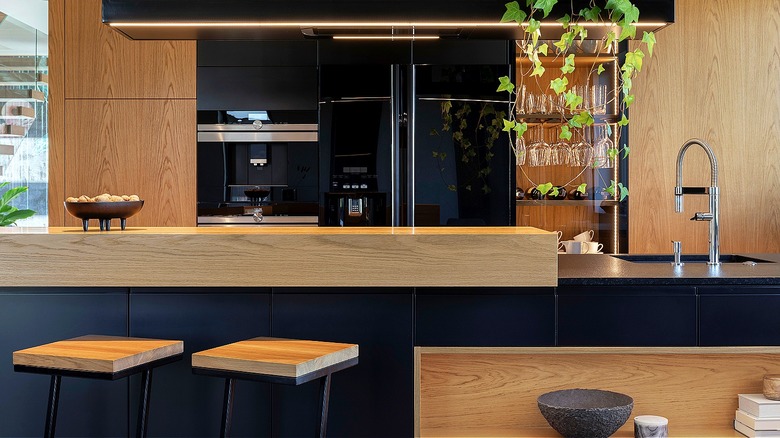
The comeback is not only about height. It is about finished. In prime UK kitchens, materials quietly define status. Oak stools with gently curved backs soften industrial steel islands—powder-coated metal frames in matte black echo modern appliances. Upholstered seats in muted velvets add depth without visual noise.

In converted lofts near Birmingham and riverside flats in Bristol, designers are pairing counter-height seating with waterfall quartz countertops and brushed-brass fixtures. The stools become sculptural accents rather than secondary afterthoughts.

The proportions matter. At counter height, the backrest line aligns neatly with the lower edge of upper cabinetry. This creates harmony across the room. It also ensures that when stools are tucked in, the visual field remains uncluttered.

A well-chosen counter height stool does not dominate the kitchen. It completes it.

Social Flow in the Modern British Home

Hospitality trends often filter into domestic design. British restaurants have long used mid-height counters to encourage sociable dining experiences. The comfort level is relaxed, yet upright enough to facilitate conversation. As homeowners spend more time entertaining at home, especially in metropolitan centres, this restaurant-inspired dynamic has migrated inward.

Think of a Saturday evening in a townhouse in Leeds. Friends gather around the island, drinks resting comfortably on a 36-inch surface. Someone chops herbs. Another scrolls through a playlist. Nobody feels separated. The seating height keeps eye lines aligned, making dialogue effortless.

This is the real reason Prime Kitchens is raising the bar. The elevation fosters connection.

A Return That Feels Forward

Trends often cycle, yet this comeback feels less nostalgic and more evolutionary. Counter-height seating first gained traction in the early 2000s, in new builds. It faded as ultra-minimal islands dominated Pinterest boards. Now, with homeowners craving warmth and adaptability, the format returns refined.

The United Kingdom’s housing stock is diverse, ranging from Edwardian semis to glass-fronted penthouses. Counter-height islands adapt across eras. They respect ceiling heights in period homes and add proportion in modern apartments.

Most importantly, they acknowledge how people truly live. Meals are quicker, conversations are fluid, and the kitchen remains the emotional centre of the home.

Raising More Than Just the Surface

Design rarely changes daily life in dramatic gestures. Instead, it reshapes routine in increments. A slightly higher seat. A more comfortable posture. A better vantage point across the room.

In the UK’s top kitchens, raising the counter has quietly elevated the experience. What appears to be a simple measurement adjustment becomes a shift in atmosphere. The kitchen feels more inclusive, more flexible, more attuned to contemporary rhythms.

As property values continue to climb in sought-after postcodes and homeowners invest in spaces that reflect both taste and practicality, counter-height seating stands out as more than a passing trend. It is a considered response to modern living.

And sometimes, raising the bar is exactly what brings everyone closer together.

Continue Reading

Categories

Trending