Vietnam’s rise as one of the world’s most desirable travel destinations didn’t happen by accident or through marketing slogans. It grew from a combination of geographic contrast, cultural depth, modern city development, and a hospitality mindset that continued to adapt without losing authenticity. The country offers dense variety in a narrow vertical strip of land, giving travelers the chance to cross from highland cold to tropical heat in a single itinerary. It also developed a tourism structure that works for backpackers, mid-range travelers, and luxury seekers without fragmenting into separate markets. The following sections explore how Vietnam reached this position and why it continues to attract visitors who want substance, scenery, affordability, and memorable environments.
1. A Country That Feels Like Multiple Worlds at Once
Vietnam stretches over 1,600 kilometers from north to south, yet the country’s width narrows to about 50 kilometers in its thinnest region. This geographic shape creates fast transitions between climates, landscapes, and ecosystems. Travelers can move from a mountain province with cool air to a lowland coastal city within a few hours. This compact diversity plays a major role in Vietnam’s popularity, because few countries offer such broad contrasts in small distances.
Northern Vietnam exemplifies this appeal through regions such as Sa Pa. The town sits among terraced rice fields carved by generations of ethnic minorities such as the Hmong and the Dao. Visitors walk or trek between villages while observing daily life shaped by agriculture, textiles, and local markets. The mountain climate appeals to tourists who want a break from tropical heat without leaving Southeast Asia.
Further north, the Ha Giang Loop has become one of Vietnam’s standout attractions. Its winding mountain roads cut through the Dong Van Karst Plateau, where dramatic limestone formations dominate every turn. The loop attracts motorbike riders who want scenery that is difficult to match elsewhere in the region. Unlike other heavily commercialized mountain routes in Asia, Ha Giang’s villages remain small, and homestays offer straightforward interactions with local families.
Central Vietnam begins the gradual shift toward warmer weather and flatter land. As the mountains soften into rolling hills, the coast becomes more accessible. Ninh Binh stands out as a transition point between the north and the center. Its river caves, rice fields, and karst formations resemble Ha Long Bay on land. Tam Coc and Trang An—two major river systems in the province—give travelers slow boat rides past limestone peaks and temple complexes built into cliffs. The contrast between this peaceful countryside and the busy capital of Hanoi just 90 minutes away makes Ninh Binh an easy choice for short escapes.
Southern Vietnam completes the country’s vertical journey with a tropical identity shaped by rivers. The Mekong Delta covers a network of waterways that support agriculture, floating markets, and villages built along the edges of canals. Cities like Cần Thơ give visitors access to Cai Rang Floating Market, where merchants sell fruit, vegetables, and cooked food directly from boats. The delta offers a type of travel built on movement between islands, bridges, and small farms. This shift from northern mountains to southern floodplains makes Vietnam feel like multiple countries in one.
Vietnam’s landscape variety is a major driver of its tourism success. Travelers can choose mountain trekking, coastal relaxation, cave exploration, or urban trips without leaving the country. This structure makes itinerary planning simple and enjoyable, especially for first-time visitors to Asia. The ability to combine these worlds in one trip keeps tourists returning, often exploring a new region each time.
2. Cities That Built Their Own Iconic Identities
Vietnam’s cities contributed heavily to its popularity by developing clear identities that appeal to different traveler types. Instead of competing with each other, each major city carved out a niche that complements the others.
Hanoi, the capital, remains one of Southeast Asia’s defining cultural cities. Its Old Quarter streets carry a layout preserved from the 13th century with narrow buildings, specialized market lanes, and a rhythm shaped by traditional crafts. Around Hoan Kiem Lake, visitors see a blend of temples, bookstores, cafés, and French colonial buildings that survived various historical periods. Hanoi’s personality attracts travelers who want culture, history, and a slow city pace that still holds modern pockets. Its café culture gives people space to rest between museums, lakes, markets, and neighborhoods that reward slow walking.
Ho Chi Minh City, often called Saigon, offers a faster pace and a stronger commercial character. The city’s districts create a network of contrasting environments: District 1 for business towers and nightlife, District 3 for French villas and shade-lined streets, and District 5 for markets influenced by Chinese heritage. Travelers who want modern restaurants, rooftop bars, craft beer, and street food find Saigon ideal. The city also attracts business travelers and remote workers who appreciate its consistent energy and wide range of activities.
Da Nang developed into Vietnam’s most balanced coastal city. It blends beaches, bridges, clean streets, and mountain views, creating an accessible environment for families, couples, digital nomads, and elderly long-stay visitors. Da Nang’s long beach makes it a favorite for water sports, while the city center offers seafood restaurants, night markets, and cultural landmarks like the Dragon Bridge. Many travelers use Da Nang as a base for visiting Hoi An, the Marble Mountains, and the Ba Na Hills theme area. This structure gives tourists both urban convenience and beach access within minutes.
Hue contributes historical weight to Vietnam’s urban landscape. As the former imperial capital, Hue contains royal tombs, pagodas, and the massive Imperial City complex built during the Nguyen Dynasty. Visitors explore moats, courtyards, gates, and once-restricted palace grounds. The Perfume River flows through the city, connecting key historic sites. While Hue receives fewer tourists than Hanoi or Da Nang, it attracts travelers interested in heritage and architecture.
The presence of multiple city identities strengthens Vietnam’s overall appeal. Travelers with different priorities—history, food, beaches, nightlife, culture—can all find a city tailored to their interests. This variety makes the country suitable for solo travelers, couples, families, and long-term visitors. The cities also support tourism infrastructure that scales well, from hostels and simple homestays to international hotels, boutique resorts, and serviced apartments. These factors helped Vietnam reach the tourism popularity it holds today.
3. The Rise of Vietnamese Food as a Global Magnet
Vietnamese cuisine contributes significantly to the country’s tourism boom. Its global popularity grew rapidly over the past two decades as travelers sought food that feels fresh, balanced, and shaped by regional differences.
Vietnam’s approach to food focuses on herbs, broths, rice noodles, grilled meats, and subtle spices. These elements appear in dishes across the country, though each region adds its own variations. Travelers often come to Vietnam specifically to try street food, market specialties, and locally famous recipes that developed across generations.
In Hanoi, bún chả gained global recognition after the 2016 visit from President Barack Obama and chef Anthony Bourdain. Photos of their meal put the small Bún Chả Hương Liên shop on the international map, sparking a wave of interest in Vietnamese grilled pork and noodle dishes. Other Hanoi specialties, such as bún thang and chả cá, give travelers reasons to explore small alley restaurants and family businesses.
In Hoi An, food plays a central cultural role through dishes like cao lầu, bánh bao bánh vạc (white rose dumplings), and mì quảng. Many travelers discover Hoi An’s food markets, where vendors sell fresh ingredients and prepared dishes side by side. The preservation of traditional recipes helped Hoi An become known as one of Vietnam’s culinary capitals.
Ho Chi Minh City offers a different food structure. Its energy attracts street food vendors, night stalls, and small family-run restaurants serving bánh xèo, cơm tấm, and various noodle soups. Vinh Khanh Street, for instance, features seafood stalls that fill the street with noise, grills, and customers throughout the evening. Saigon’s food environment supports both affordable meals and innovative modern restaurants that reinterpret traditional dishes.
Seafood plays a major role across coastal regions such as Da Nang, Nha Trang, Phu Quoc, and Mui Ne. Tourists often choose Da Nang for beachside seafood restaurants where fresh fish, squid, clams, and prawns appear on ice displays before cooking. Nha Trang developed a reputation for fish hotpot, jellyfish noodles, and grilled oysters. Phu Quoc integrates seafood with its famous fish sauce industry, drawing visitors who want local ingredients prepared on the island.
Vietnam’s food culture supports tourism by offering high variety at reasonable prices. Each region gives travelers distinct flavors and approaches to cooking, making food a central part of itinerary planning. This culinary landscape encourages repeat visits, because many travelers realize they cannot cover the country’s food range in a single trip. It is also the reason why some tourists extend their stays, often working or studying in Vietnam while exploring new dishes. The natural presence of sidewalk cooking, markets, and small eateries gives food a social role that visitors appreciate. Even modern cafés and restaurants use street-facing layouts, sometimes placing stools directly beside busy roads or long rows of restaurant tables where both locals and travelers share meals.
4. A Tourism Boom Built on Price, Access, and Infrastructure
Vietnam’s affordability played a major role in its tourism rise. The country found a balance between providing low prices and maintaining quality, which gave travelers confidence that their money would stretch further without sacrificing comfort.
Accommodation variety contributed heavily to this effect. Hostels in Hanoi, Da Nang, and Ho Chi Minh City charge competitive prices while maintaining clean and modern designs. At the same time, boutique hotels offer personalized environments with moderate costs. High-end resorts, especially along the coastline, provide luxury stays that cost significantly less than comparable options in Western countries or other major Asian destinations. This structure makes Vietnam accessible to a broad range of travelers.
Transport infrastructure improved rapidly over the past decade. New airports such as Phu Quoc International Airport and Van Don Airport expanded flight access. Domestic airlines and budget carriers increased competition, lowering ticket prices on routes connecting cities like Hanoi, Da Nang, Nha Trang, and Ho Chi Minh City. The ease of moving between regions encouraged travelers to visit multiple places in one trip rather than staying in a single city.
Vietnam also built a system of sleeper buses and trains that fit the country’s long vertical geography. Backpackers often use night buses to travel between cities, turning long distances into manageable overnight journeys. The Reunification Express Railway, connecting Hanoi and Ho Chi Minh City, remains an appealing option for travelers who want to cross the country slowly and see the changing landscapes.
Tourism infrastructure developed alongside the country’s economic growth. Following economic reforms in the late 1980s, Vietnam opened up to foreign businesses, creating investment opportunities in hotels, resorts, tour companies, and related industries. As a result, Vietnamese tourism operators built reliable transport networks, guided tours, and hospitality services that could scale with increasing demand. Cities improved their airports, roads, and public spaces, and coastal areas introduced environmental preservation initiatives that balanced development with natural protection.
Visa policy changes also supported tourism growth. Vietnam expanded visa-on-arrival options and later introduced e-visas for travelers from many countries. This simplified the process, making the country more attractive to spontaneous or short-notice visitors. The government continues to adjust policies, often extending visa durations to attract long-stay tourists and digital workers.
Affordability, access, and infrastructure worked together to create a travel environment where visitors could explore comfortably. These elements helped Vietnam attract millions of tourists annually, with the numbers growing consistently until global travel disruptions in 2020. As travel recovered, Vietnam regained momentum quickly because its tourism model remained strong, adaptable, and appealing across demographic groups.
5. The Visual Icons That Sold Themselves to the World
Vietnam’s tourism boom accelerated alongside the growth of social media, visual storytelling, and travel photography. The country’s landscapes became symbolic markers of Southeast Asian travel, appearing in magazines, travel vlogs, and online platforms that introduced a new generation to Vietnam’s natural and cultural sites.
Ha Long Bay became one of Vietnam’s first global icons. Its limestone towers rise from calm, green waters, creating spaces for boat cruises, kayaking, and cave exploration. The bay’s scale and geology attract travelers looking for scenery that feels otherworldly yet accessible. Multiple cruise operators offer overnight trips with varying comfort levels, making the bay suitable for different budgets.
Ninh Binh offers visuals that match Ha Long Bay’s aesthetic but with landscapes on land. Trang An’s river caves and Tam Coc’s rice fields draw photographers who want to capture sharp limestone peaks mirrored in water. These areas became famous after their appearance in the film Kong: Skull Island, attracting visitors who previously had not considered them.
Phong Nha-Ke Bang National Park introduced Vietnam to international adventure travelers. Sơn Đoòng, the world’s largest cave, sits within this park, though access requires specialized tours. Other caves—such as Paradise Cave and Phong Nha Cave—provide easier entry for regular tourists. The combination of underground rivers, vast chambers, and limestone formations made Phong Nha a magnet for travelers who want nature-focused activities.
Hoi An gained global visibility through its lantern-lit streets, preserved architecture, and riverside setting. The Old Town remains one of Asia’s most photographed heritage districts. Despite its popularity, the town maintains traditional craftsmanship through tailors, woodworkers, lantern makers, and food vendors. Hoi An’s visuals support its tourism success, but the town’s cultural atmosphere adds lasting value.
Further north, Ban Gioc Waterfall emerged as another powerful image. Located near the Chinese border, it spans 300 meters across terraced cliffs, creating a multi-level flow that shifts with the rainy season. The waterfall’s remote location attracts travelers who want natural beauty without heavy crowds.
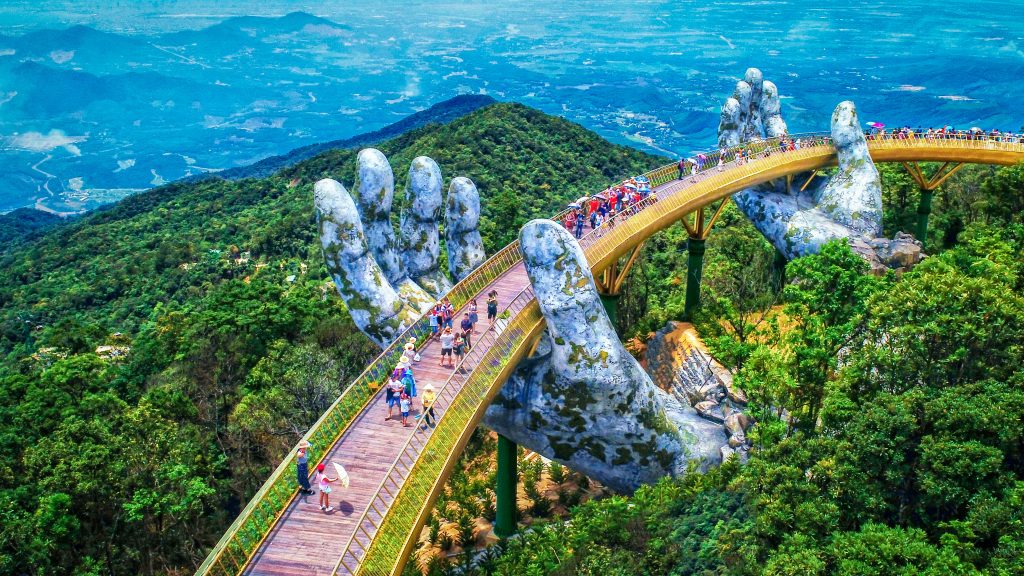
In central Vietnam, the Golden Bridge at Ba Na Hills became a viral visual phenomenon. The walkway appears to be held up by two massive stone hands. Though part of a theme park area, the bridge’s design introduced a new modern icon to Vietnam’s tourism catalog.
These locations gained attention not only because of their beauty but because they photographed well. The rise of drones, travel filmmaking, and content-sharing platforms amplified Vietnam’s appeal. Tourists realized that many of the country’s landscapes were accessible without extreme planning or cost. This visual momentum helped Vietnam attract both casual travelers and those who build trips around photography, hiking, or nature.
6. A Deep Cultural Narrative That Travelers Actually Feel
Vietnam’s cultural depth contributes strongly to its popularity. Travelers often comment on how the country balances modern growth with local identity, creating environments where cultural traditions remain visible in daily life.
Hanoi exemplifies this through its lakes, temples, and historic districts. Around Hoan Kiem Lake, locals practice morning tai chi, read newspapers, or meet friends. These habits create a rhythm that travelers notice immediately. The Temple of Literature, built in 1070, remains one of the country’s most meaningful heritage sites, celebrating scholars and Confucian education. Visitors walk through courtyards, altars, and stone steles that honor historical achievements. The combination of public space, traditional behavior, and preserved architecture gives Hanoi a cultural personality that resonates with visitors.
The Old Quarter supports this cultural story through its craft streets. Many streets still reflect their historical specializations, such as silverware, textiles, bamboo goods, and traditional medicine. Tourists often find small family businesses that have operated for generations. These interactions create a sense of connection that visitors value, especially compared to more commercialized experiences in other countries.
In central Vietnam, Hue reflects the country’s imperial history. Royal tombs, pagodas, and the Imperial City show how Vietnamese governance, architecture, and rituals developed over centuries. Travelers who explore these sites gain insight into dynastic structures, spiritual beliefs, and architectural craftsmanship.
Ho Chi Minh City offers a different cultural layer. The Cu Chi Tunnels near the city provide a view into Vietnam’s wartime history. Visitors walk through sections of underground tunnels used during the Vietnam War. Museums such as the War Remnants Museum present historical documents, photographs, and objects that allow travelers to understand the conflict’s complexity.
Across the country, water puppet shows introduce another cultural tradition. This art form, originating from rural villages in the Red River Delta, uses wooden puppets controlled from behind screens to tell stories about farming, legends, and daily life. Shows in Hanoi and Ho Chi Minh City remain popular with families and travelers who want cultural performances rooted in history.
Interpersonal interactions also influence Vietnam’s success. Many travelers appreciate the country’s hospitality, shaped by family networks, small businesses, and neighborhood connections. Homestays in rural regions such as Ha Giang, Sa Pa, and the Mekong Delta give tourists direct contact with local families, often sharing meals and conversations. Visitors sense a cultural openness that encourages genuine interactions.
Cultural depth keeps Vietnam from becoming a destination defined solely by scenery or price. Travelers leave with stories about people, traditions, and daily life, which strengthens the country’s long-term appeal and encourages word-of-mouth recommendations.
7. Vietnam as the New Long-Stay Destination
Vietnam’s tourism evolution accelerated after the global travel slowdown in 2020. As tourism restarted, Vietnam attracted a new type of traveler: long-stay visitors, remote workers, and digital nomads who wanted stable, affordable places with strong community ties.
Da Nang became one of the leading hubs for this shift. Its beaches, modern apartments, cafés, and co-working spaces make it suitable for professionals who work online. The city offers a relaxed pace with enough infrastructure to support daily routines, fitness, and social activities. Many remote workers use Da Nang as a base for trips to Hue, Hoi An, and Ba Na Hills.
Hoi An also grew into a long-stay location, though it attracts more creatives, retirees, and part-time travelers. The town’s slower rhythm, riverside cafés, craft workshops, and pedestrian sections appeal to those who prefer quieter environments. Many visitors stay for several months, joining language classes, cooking courses, or volunteer programs.
Nha Trang developed a large community of Russian, Korean, and Chinese long-stay travelers. Its coastline, warm weather, and developed resort area create a stable environment for seasonal or rotational living. Visitors combine beach life with access to markets, medical clinics, and international restaurants.
Ho Chi Minh City appeals to remote workers who want a metropolitan environment. Its café culture supports long working hours, with many establishments offering strong Wi-Fi, quiet corners, and extended opening hours. The city’s business environment attracts entrepreneurs, freelancers, and digital professionals who use Vietnam as a regional base.
Phu Quoc Island became an emerging long-stay destination due to its beaches, island infrastructure, and visa-friendly policies. Many travelers choose the island for seasonal stays, combining remote work with a relaxed tropical environment.
Vietnam’s affordability reinforces its appeal for long stays. Travelers benefit from reasonable accommodation costs, affordable food, and efficient transportation. Co-working spaces in Hanoi, Da Nang, and Ho Chi Minh City offer month-to-month memberships without complicated contracts.
The government continues to adjust visa policies to attract longer visits. E-visas now cover more nationalities, and extensions support stays of several months. These frameworks maintain Vietnam’s relevance in the long-stay travel market, which has grown significantly worldwide.
The post-pandemic era highlighted Vietnam’s ability to adapt while staying culturally grounded. This dual strength—modern conveniences paired with traditional identity—attracts travelers who want both comfort and authenticity.