
Connect with us

Blog

How Digital Lending Platforms Can Use Real-Time Financial Data to Strengthen SME Credit Assessment

Published

on

How Digital Lending Platforms Can Use Real-Time Financial Data to Strengthen SME Credit Assessment

Small and medium-sized enterprises (SMEs) often have financial profiles that change rapidly. Revenue can fluctuate with seasonal demand, customer payments may arrive late, and unexpected expenses can affect working capital. For lenders, relying solely on historical financial statements or traditional credit scores may not provide a complete picture of a business’s current financial health.

Real-time financial data is changing how lenders evaluate these businesses. By connecting banking transactions, accounting records, and operational information, a modern digital lending platform can support faster credit assessments, improve risk visibility, and help lenders make more informed financing decisions.

Why Traditional SME Credit Assessment Falls Short

Traditional credit assessment often relies on financial statements, tax returns, credit reports, and manually collected bank records. Although these documents provide useful historical information, they may not reflect recent changes in a business’s financial position.

For example, an SME may have secured a major customer contract since its last financial statement was prepared. Another business may have experienced a recent decline in cash reserves that has not yet appeared in its annual accounts.

These gaps can create challenges for lenders, including:

  • Delayed credit decisions due to manual document collection
  • Limited visibility into current cash flow
  • Difficulty evaluating businesses with limited credit histories
  • Inconsistent information across financial systems
  • Increased administrative work for lending teams

Access to current financial information helps address these limitations by providing a more complete and timely view of borrower performance.

How Real-Time Financial Data Strengthens Credit Assessment

A modern digital lending platform can connect to authorized financial data sources through APIs and retrieve relevant information with customer consent. These connections may include banking transactions, accounting software, payment systems, and other business applications.

Instead of depending exclusively on documents submitted during an application, lenders can examine current financial activity and evaluate patterns over time.

Important indicators include:

  • Revenue consistency and sales trends
  • Cash inflows and outflows
  • Existing financial commitments
  • Accounts receivable and payment behavior
  • Operating expenses and liquidity
  • Seasonal changes in business performance

These indicators provide additional context for assessing repayment capacity. They can also help lenders distinguish temporary cash flow fluctuations from more persistent financial challenges.

Moving From Historical Reports to Real-Time Decisions

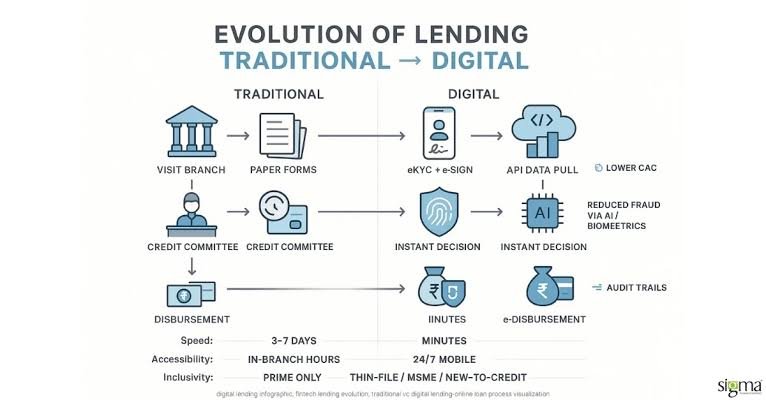
Traditional underwriting typically evaluates a borrower’s financial position at a specific point in time. Real-time assessment introduces a more dynamic approach by using updated information to support credit decisions.

For instance, a business seeking working capital may have irregular monthly revenue but consistent customer payments across its operating cycle. Real-time transaction data can help lenders understand this pattern instead of interpreting a single month’s figures in isolation.

This approach can support faster decisions while improving the relevance of credit assessments. Automated underwriting systems can also apply predefined lending criteria to incoming applications, reducing manual intervention in routine cases.

Some modern lending systems can process more than 95% of incoming deals in under 45 seconds, depending on their configuration and the complexity of each application. Such automation can improve processing speed while allowing lending teams to focus on exceptions and more complex assessments.

The Role of AI and Business Data Analytics

Real-time data becomes more valuable when combined with analytical models that identify patterns and evaluate risk.

Artificial intelligence can help lenders analyze large volumes of financial information, identify unusual transaction behavior, and assess changes in revenue or expenses. Rather than treating each financial indicator separately, analytical models can evaluate multiple signals to develop a broader understanding of borrower performance.

This can support:

  • More consistent application of credit policies
  • Earlier identification of potential repayment risks
  • Better assessment of changing financial conditions
  • More efficient underwriting workflows
  • Improved visibility across lending portfolios

However, automated assessments should remain subject to appropriate validation, monitoring, and human review. Data quality, model transparency, and responsible lending practices remain essential to reliable credit decisions.

Improving Financial Inclusion for SMEs

Businesses with limited credit histories can face difficulties obtaining financing, even when their operations are stable. Traditional credit models may have limited information available to assess these companies.

Real-time financial data can provide additional evidence of business performance. Transaction histories, recurring customer payments, and consistent operating activity may help lenders understand repayment capacity beyond conventional credit indicators.

This does not guarantee approval, but it can support a more nuanced assessment of businesses that might otherwise be difficult to evaluate.

For lenders, this creates an opportunity to assess a wider range of SMEs using relevant financial information while maintaining suitable risk thresholds.

How a Loan Management Platform Supports Ongoing Monitoring

Credit assessment should not end when a loan is approved. A borrower’s financial position can change throughout the repayment period, making ongoing monitoring an important part of risk management.

A loan management platform can connect origination, repayment tracking, servicing, and portfolio monitoring within a coordinated workflow. When integrated with real-time financial data, it can help lenders identify changes in borrower behavior and recognize potential warning signs earlier.

For example, declining account balances, repeated payment delays, or increasing financial obligations may indicate that a borrower needs closer attention.

Ongoing monitoring can help lenders respond proactively, maintain better portfolio visibility, and make more informed servicing decisions. Any intervention should follow established policies and take account of the broader circumstances rather than relying on a single indicator.

Integrating Data Without Replacing Existing Systems

Lenders do not necessarily need to replace their existing technology infrastructure to benefit from real-time financial information. API-first architecture can connect banking data, accounting systems, underwriting tools, and servicing applications.

A well-integrated digital lending platform can help standardize information from different sources, reduce repeated data entry, and create a consistent flow of information across the credit lifecycle.

Secure data access, customer consent, encryption, access controls, and regulatory compliance must remain central to these integrations. Lenders should also establish procedures for handling missing information, data discrepancies, and technical interruptions.

Conclusion

Real-time financial data is helping lenders move beyond static credit assessments toward more current, contextual evaluations of SME financial health. By connecting banking information, accounting records, and operational data, a digital lending platform can improve visibility into cash flow, repayment capacity, and emerging risks.

When combined with AI-driven analysis and a loan management platform, these insights can support faster underwriting, more consistent decisions, and stronger ongoing portfolio monitoring.

The objective is not simply to approve loans more quickly. It is to understand businesses more accurately, assess risk responsibly, and make financing decisions based on relevant evidence. As financial connectivity continues to improve, real-time data will play an increasingly important role in building more responsive and informed SME lending processes.


Continue Reading

Categories

Trending