
Business
Six Key Techniques for Sheet Metal Reinforcement

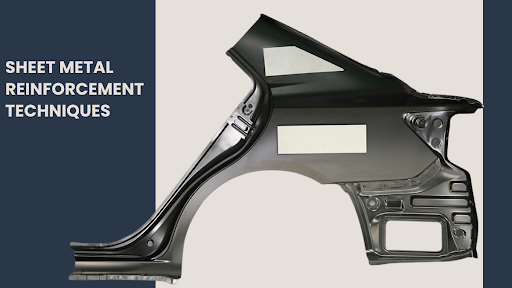
Sheet metal reinforcement enhances the strength of metal parts without increasing their thickness. It involves adding different design features and some minor structural elements to sheet metal parts.
Reinforcing is also about reducing overall weight without compromising the stiffness. You can apply features like hemmed edges, flanges, punched holes, ribs, and metal profile stretching.
The upcoming sections will elaborate on six key reinforcement techniques to strengthen the metal parts.
What is meant by Sheet Metal Reinforcement?
Sheet metal reinforcement is a systematic engineering approach that incorporates various techniques throughout the fabrication process, including design, sheet selection, forming, and parts assembly.
Designers and fabricators include specific design features and structural supports in components to meet the required strength, stiffness, performance, flexibility, and durability.
Reinforcements such as hems, ribs, tapered bends, and welding also help reduce stress concentration, preventing cracks and warping wrapping. It is common practice across various industries, including automotive, construction, aerospace, and machinery.
Here are the reasons why reinforcement is important for sheet metal parts:
- Increase in rigidity, stiffness, and strength.
- Prevents buckling, material warping wrapping, and cracking.
- Helps to reduce the overall part weight, saving material cost.
- Reduces vibration and increases fatigue life.
- Facilitates the strong and precise assembly.
Next, let’s discuss six key techniques of reinforcing the sheet metal parts and products:
1. Edge Hemming
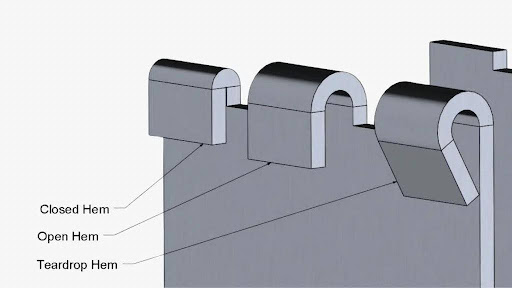
Edge hemming
Hems are the small folds on the edges of sheet metal, in the form of closed, open, or teardrop tedrapod. It reinforces the edges and provides smooth, aesthetic finishes. Additionally, edge hemming also contributes to the safe handling of metal parts. So, include hemmed edges with a size equal to four times theof thickness.
2. Profile Stretching
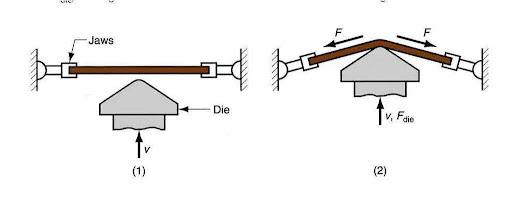
Profile stretching
This technique metallurgically strengthens sheet metal parts by refining the material’s grain direction. Stretching reduces sheet thickness while forming a profile without losing significant strength.
Advanced stretch forming machines, such as swing arm V-presses, can simultaneously bend and stretch the metal profile to create a designed shape. For example, roof panels, duct transition sections, and the skins of aircraft fuselages.
3. Straight Bend Lines and Flanges
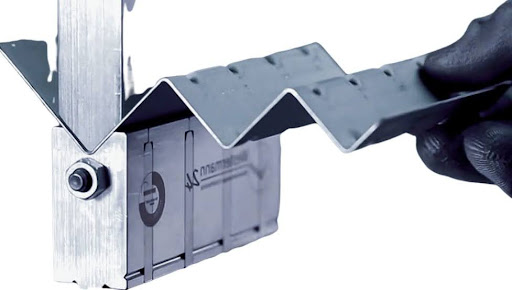
Straight bends
How sheet metal forms also impact the overall stiffness of the fabricated structure, for instance, forming straight bends along a determined line can reinforce the structural strength and increase resistance against material warping. Additionally, straight bends are simple and easier to form, making a cost-effective sheet metal reinforcement technique.
Flanges are the flat sections formed by the bend line and the sheet edge. If you include flanges of the correct sizes in your sheet metal design, they can distribute stress uniformly, especially in high-load applications.
4. Strategic Hole Punching
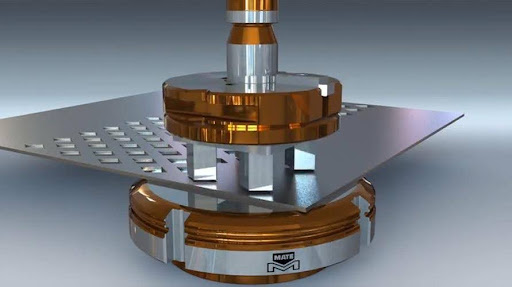
hole punching
Punching creates small holes of different shapes using a die-punch setup. Punching holes by analyzing the stress flow can optimize the distribution across a wide cross-section. Additionally, this technique reduces the overall weight of metal parts. However, punching too many holes can cause the material to fail under load.
5. Welding, Riveting, and Bolting
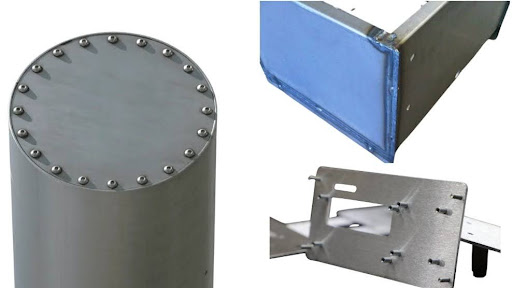
Sheet metal joining reinforcement
These techniques are related to the joining of sheet metal parts. Welding and riveting create permanent joints, whereas nuts & bolts can be disassembled when required. Welding provides a metallurgically bonded joint that can last as long as the parent material. On the other hand, riveting and bolting are flexible and simple to perform.
6. Bending Relief and Triangular Ribs
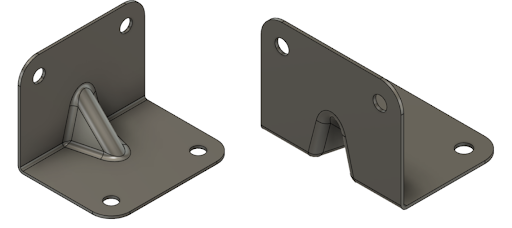
Triangular ribs
Adding a small notch or and tabs as relief on the edges of the bending line helps to structurally strengthen the part. Reliefs help to release the stress applied by the bending press.
Additionally, you can add triangular ribs near the bending area to enhance rigidity. However, it can increase the forming complexity.
Which Types of Sheet Metal Strength Can Be Reinforced?
There are several types of metal strength classified based on resistance against the type & direction of subjected loads. It includes shear strength, tensile strength, compressive strength, fatigue strength, and yield strength.
Let’s look at the list below that outlines the types of strength that can be reinforced:.
-
- Tensile Strength: It is the resistance against pulling & stretching of sheet metal.
- Compressive Strength: The ability to withstand compressive force without buckling or cracking.
- Fatigue Strength: The ability to perform for a long time under continuous loads.
- Yield Strength: Resistance of metal against permanent deformation under stress.
- Impact Strength: The ability of a material to absorb instant loads and forces.
- Shear Strength: The ability to resist shear cutting forces.
- Bending Strength: It is the resistance to cracking or failure when a bending force is applied.
Applications of Reinforced Metal Parts
The uses of reinforced sheet metal parts are widespread across multiple industries, including automotive, aerospace, machinery & hardware, marine, electronics, and construction.
Let’s look at the table below.
| Industry | Why Reinforcement? | Application Examples |
| Automotive | To withstand high cyclic load, impacts, and a tight weight target | Mount brackets, door inner panels, and the exhaust system |
| Aerospace | Strength-to-weight and fatigue resistance | Wing-fitting brackets, landing-gear, avionics mounting plates |
| Construction | To withstand large static loads, buckling risk, and concentrated fastener loads | Beam reinforcement, heavy door hinges, and roof purlins |
| Industrial Machinery | Heavy point loads, vibration, wear, and assembly forces that cause distortion | Gearbox housings, motor mount brackets, and conveyors |
| Marine | To withstand cyclic wave loads and corrosive environments | Deck fittings, reinforced flanges, pipe supports, and structural attachments |
| Electronics | Makes stiff to withstand repeated fastener cycles while staying light | Laptop basepan, hinge brackets, appliance door panels |
Conclusion
Reinforcement is all about adding strength and stiffness to sheet metal parts, which can be achieved by incorporating small structural elements and specific design features. Based on what kind of parts you are making, choose from numerous sheet metal reinforcement options, such as hemmed edges, flanges, straight bends, welding, and strategic hole punching.
Furthermore, always consult with your sheet metal fabrication service provider about the reinforcement of sheet metal parts. It might include design optimization, sheet selection, and forming considerations.
FAQs:
How to make sheet metal rigid?
You can make sheet metal rigid by adding reinforcements, such as hem or flanges, weld gussets, bond stiffeners, or ribs.
What are the different types of strengths for sheet metal?
The common types of sheet metal strength include tensile strength, compressive strength, yield strength, fatigue strength, and shear strength.

Best Smart Mattress: DeRUCCI, Eight Sleep and Sleep Number Compared

Fixed Income, Variable Markets: What This GrowthDirect Review Tested

Best Perfumes for Men in the UAE Perfect for Evening Wear

How to Choose the Perfect Oval Diamond Engagement Ring: Shape, Style, Gold & Buying Tips

Years Away From the Markets: What a Returning Trader Found When Testing Brent Markets

A Long Term Investor Opens a Trade Account: My Inverset Review

Putting an Inheritance to Work Slowly, With Keystone Wealth Management

How Healthcare SEO Increases Patient Appointments Without Paid Ads

Choosing an Account That Matches How You Trade

Why Christian T-Shirts Are More Than Just Fashion Statements

Who Is Marlene Knaus? The Untold Story of Niki Lauda’s First Wife

Jacqueline Bernice Mitchell: The Inspiring Story of Jerry Rice’s Ex-Wife

Curious About JOI Database? Read This First Before You Click Anything

Mickey Middleton: The Untold Story of Bryan Cranston’s First Wife

The Best Sales Enablement Platforms to Boost Your Sales Process in 2026

Where Is Barbara Boothe Now? Inside Her Life After Larry Ellison

Who Is Jasmine Williams? Meet Brad Williams’ Amazing Wife

Wendy Lang: Meet the Therapist Married to Cenk Uygur

Where Is Noelle Watters Now? Jesse Watters’ Ex-Wife’s Life After Divorce

Alisande Ullman Today: What Happened After Her Divorce from Leslie Nielsen?
Best Smart Mattress: DeRUCCI, Eight Sleep and Sleep Number Compared
Fixed Income, Variable Markets: What This GrowthDirect Review Tested
Best Perfumes for Men in the UAE Perfect for Evening Wear
How to Choose the Perfect Oval Diamond Engagement Ring: Shape, Style, Gold & Buying Tips
Years Away From the Markets: What a Returning Trader Found When Testing Brent Markets
A Long Term Investor Opens a Trade Account: My Inverset Review
Putting an Inheritance to Work Slowly, With Keystone Wealth Management
How Healthcare SEO Increases Patient Appointments Without Paid Ads
Choosing an Account That Matches How You Trade
Why Christian T-Shirts Are More Than Just Fashion Statements
-
 Celebrity1 year ago
Who Is Marlene Knaus? The Untold Story of Niki Lauda’s First Wife
-
 Celebrity1 year ago
Jacqueline Bernice Mitchell: The Inspiring Story of Jerry Rice’s Ex-Wife
-
 Entertainment1 year ago
Curious About JOI Database? Read This First Before You Click Anything
-
 Celebrity1 year ago
Mickey Middleton: The Untold Story of Bryan Cranston’s First Wife